
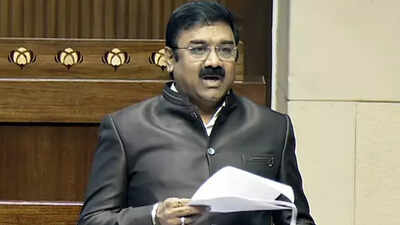
Rajya Sabha MP Ajeet Gopchade has written to Prime Minister Narendra Modi seeking an institutional mechanism for the representation of divyang persons in Parliament and state legislatures, citing examples of countries that have created such systems in their legislatures.The Prime Minister’s Office (PMO) has forwarded the letter to the ministry of home affairs and law ministry “for appropriate action”.Gopchade, a BJP MP from Maharashtra, wrote to the prime minister on Sept 28, 2026, seeking examination of the feasibility of appropriate mechanisms for greater representation of divyang persons in Parliament, “including consideration of suitable candidates for nomination to the Rajya Sabha, within the existing constitutional framework”.He suggested the creation of a transparent mechanism for “identifying persons with disabilities who have exceptional achievements, professional expertise, public-service experience and demonstrated leadership, so that their knowledge and lived experience can contribute to legislative and policy-making processes”.Appreciating Modi govt’s emphasis on dignity, inclusion and empowerment of differently-abled persons, including usage of the terminology ‘divyang’, Gopchade requested that their “representation in democratic institutions may also merit further consideration”.“A Parliament that provides meaningful opportunities for capable persons with disabilities to participate in law-making can help bring diverse experiences and perspectives into the legislative process,” he underlined, while highlighting examples of different countries that have created institutional mechanisms to facilitate the participation or representation of persons with disabilities in their legislatures.The letter cited the reservation of five parliamentary seats in Uganda for persons with disabilities, which are filled through special electoral colleges. In Japan, this category of persons has been provided an opportunity to participate in parliamentary proceedings, including through a special session involving its Upper House.In Zimbabwe, representation of differently-abled persons in the Senate is provided through a dedicated electoral mechanism. In Egypt, political parties are required to include candidates with disabilities in their electoral lists; while in Liberia a special constituency mechanism provides for their representation. In Namibia, a person with a disability was appointed to Parliament in 2005.Also recalling the noteworthy precedent in the Indian Parliament in Sadhan Chandra Gupta, a distinguished lawyer and politician who became the first visually-challenged MP, Gopchade noted: “His contribution demonstrates that disability need not be a barrier to distinguished legislative service”.Though he did not cite more examples, sources close to Gopchade said Jaipal Reddy, a former Congress MP and Union minister, has been the last notable person with disability who has contributed immensely to parliamentary proceedings.Gopchade suggested that divyang persons be given representation in Parliament through the nominated MP route, as “many exceptionally capable divyang persons may face practical difficulties in participating in electoral politics and competing through conventional electoral processes”.
“This makes it worthwhile to examine whether appropriate constitutional, statutory and institutional mechanisms can be developed to facilitate their greater participation in Parliament and other legislative bodies,” he said.The PMO, acknowledging Gopchade’s letter, forwarded his suggestions to the ministry of law and justice and ministry of home affairs on October 29, 2026, “for appropriate action”. While the matter relating to representation of persons in Parliament primarily pertains to the ministry of law and justice, the nomination of members to Rajya Sabha primarily pertains to the ministry of home affairs, as per the Govt of India (Allocation of Business) Rules, 1961.