
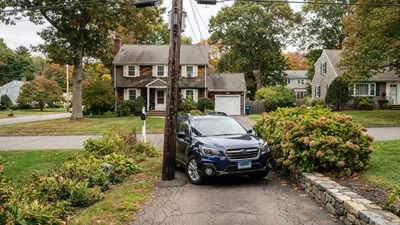
A utility pole that stood in the way of two homeowners widening their driveway has remained at the centre of a dispute between neighbours in Easton, Connecticut, since 2019. The disagreement began when the homeowners sought permission to remove the pole but their neighbours refused, despite an existing agreement allowing access through the property.The dispute has now reached another turning point, with the Connecticut Appellate Court upholding an order requiring the neighbours to approve the work needed to remove the pole. The decision means the homeowners can move ahead with plans to widen their driveway, subject to the utility companies carrying out the necessary work.According to legal information website Justia, the case involved Robert J. Krasko and Francis L. O’Neill, who own one property, and Robert Konkos and Chelsea Konkos, who previously owned the neighbouring property. The appeal was decided on November 10, after the neighbours challenged a 2025 ruling in favour of the homeowners.The disagreement centred on a 25-foot-wide access route connecting the homeowners’ property to a public road. Although the route was meant to provide vehicle access, an old utility pole occupied part of the space needed for their driveway.
Why the pole became a problem
The two properties were originally part of a subdivision created in 1978. The homeowners’ plot did not have direct access to the public road, so a route across the neighbouring property was provided.In December 2015, an agreement formally gave the owner of the land without direct road access the right to use this route. It allowed people to travel across it on foot or by vehicle and permitted the construction of a shared driveway.The agreement also required the neighbouring property owners not to block access through the designated area.However, a utility pole already stood close to the middle of this route. It supplied electricity and telephone services to the neighbouring house. A second pole was installed later to serve the house built on the other property, but the older one remained because it continued to carry the neighbours’ electrical connection.When Krasko and O’Neill bought the property, their driveway ran close to the older pole. They wanted to widen it but said the pole made it difficult to use the available space.They approached their neighbours for permission to have it removed. The neighbours declined, leading the homeowners to file a lawsuit in, 2019.
Disagreement over cost and removal method
Removing the old pole was not simply a matter of taking it down. The electricity connection serving the neighbours’ house also had to be transferred to the newer pole.The initial proposal involved installing new electrical cables. This would have required digging up parts of the neighbours’ driveway and yard, raising concerns about expense and disruption.The homeowners later suggested a different arrangement. Under the revised plan, the existing cable would be disconnected from the old pole and extended through a seven-foot trench to the newer one. A splice box would connect the cable to the new pole.This approach meant that the neighbours would not need a completely new electrical connection. The work was expected to cause only a short interruption to their electricity supply.The homeowners asked the court to require their neighbours to approve this revised plan and allow the old pole to be removed.
Safety concerns and driveway width considered
During the trial in November 2024, both sides presented expert assessments of the driveway and the work required to widen it.The homeowners argued that the existing driveway was too narrow for comfortable and safe access. Their engineer, James Luczak, measured its usable width at eight-and-a-half feet.He also pointed to a steep drop on the opposite side of the driveway. According to his assessment, widening the driveway in that direction would require a retaining wall about 175 feet long and seven feet high.The neighbours disputed this assessment. Their experts said the driveway was wider than the measurement provided by the homeowners’ engineer. They also believed that a much smaller retaining wall could provide an alternative way to expand it.The neighbours further questioned whether removing the pole was necessary, pointing out that vehicles had managed to use the existing driveway.Krasko told the court that some delivery vehicles had struggled to pass the pole. He also raised concerns about driving through the narrow space during snowy or icy conditions.The court considered these competing accounts along with photographs, property records and expert evidence.It also examined local zoning requirements. Under Easton’s regulations, driveways longer than 200 feet must be at least 12 feet wide. Both sides agreed that the driveway exceeded 200 feet and was narrower than the required width.
Lower court rules in homeowners’ favour
On May 21, 2025, the trial court ruled that the homeowners could proceed with their proposed plan. It found that removing the pole would help address the driveway’s width and safety problems. It also considered the alternative of widening the driveway on the opposite side impractical because of the drop in the ground and the engineering work involved.The court was not convinced that the revised electrical plan would cause significant problems for the neighbours. Evidence presented during the trial indicated that transferring the existing connection was routine work and could be completed by a licensed electrician.The expected interruption to the neighbours’ electricity supply was estimated at two to three hours. The court therefore directed the neighbours to provide the necessary authorisation for the utility companies to remove the old pole and transfer their electrical connection to the newer one.The neighbours challenged this decision, arguing that the homeowners had other ways to widen their driveway and that the proposed work could affect their property.
Appeals court upholds the order
The Connecticut Appellate Court has now upheld the lower court’s decision. It found that the homeowners had a valid right to use the access route and that their plan to widen the driveway was reasonable in the circumstances.The judges also noted that the availability of another option did not automatically mean the homeowners had to choose it. The alternative would involve substantial construction work because of the steep ground beside the driveway.The court also considered the changes since the original agreement was signed. At that time, the older pole was the only source of electricity for the neighbours’ house. A second pole was installed later, making it possible to transfer the existing connection without the extensive work initially proposed.The neighbours had also argued that the lower court had granted a type of legal relief that the homeowners had not formally requested. The appellate court disagreed, saying the order specifically required the neighbours to approve the utility work. It was therefore an order to take action, not merely a statement about the parties’ property rights.The appeals court affirmed the judgment in favour of Krasko and O’Neill. All three judges on the panel agreed with the decision.