
In a rock about 150 million years old in Wyoming, an adult sauropod and two juveniles lay together. Between 2023 and 2025, their bones were excavated, and the three were later nicknamed Daisy, Lucky and Lucy. In November 2026, the Carnegie Museum of Natural History in Pittsburgh announced that all three are coming to the city on long loans from Ken Griffin, the founder and CEO of Citadel.The fossils are carefully preserved before being on display in a museum. But, these three are not arriving as finished pieces. They will be coming in raw excavated form with a lot of work still remaining to be done on them. While this work is done in back rooms in more places, Pittsburgh plans to do it in public. A $5 million gift from Griffin will build a fossil preparation laboratory where visitors can watch the cleaning, preserving and studying of the three dinosaurs. The money will also fund research, including a study of the rare fossilized skin samples that came with the fossils.The announcement came less than two months after Griffin’s record $3 billion pledge to Carnegie Mellon University, also in Pittsburgh.
Meet Daisy, Lucky and Lucy
The three are sauropods, the long-necked, plant-eating giants. Daisy is an adult, and Lucky and Lucy are juveniles. While their nicknames make them seem like citizens of today, they were actually excavated from rocks about 150 million years old in Wyoming. As reported by the Pittsburgh Post-Gazette, the three fossils were found between 2023 and 2025 by the commercial paleontology lab Fossilogic in Washakie County, Wyoming.
The lab is the main focus
In most instances, fossil work happens behind the scenes. Pittsburgh’s plan is to bring the preparation lab out into the open, where visitors can watch it. A $5 million gift from Griffin will pay for a new fossil preparation laboratory visible to the public. Visitors will be able to watch the uncovering, preserving and studying of Daisy, Lucky and Lucy as it happens.The gift will also fund research on the fossils. One target is the fossilized skin samples that came with the dinosaurs, which are rare. Scientists hope the skin will help them understand these animals better.Carnegie Museum of Natural History Director Dr. Carey Scheide Miller said to CBS News the partnership lets the museum bring the public “directly into the practice of science.” She described visitors seeing fossil preparation, conservation, research and discovery as the work happens.
How fossil work is usually done
Fossil work starts in the field, where a team digs out the bones from the surrounding rock. Because the bones are fragile, the diggers often wrap them in protective coverings before moving them. The bones then travel to a lab, and that is where the slow part begins. This lab would be on display in the Carnegie Museum.
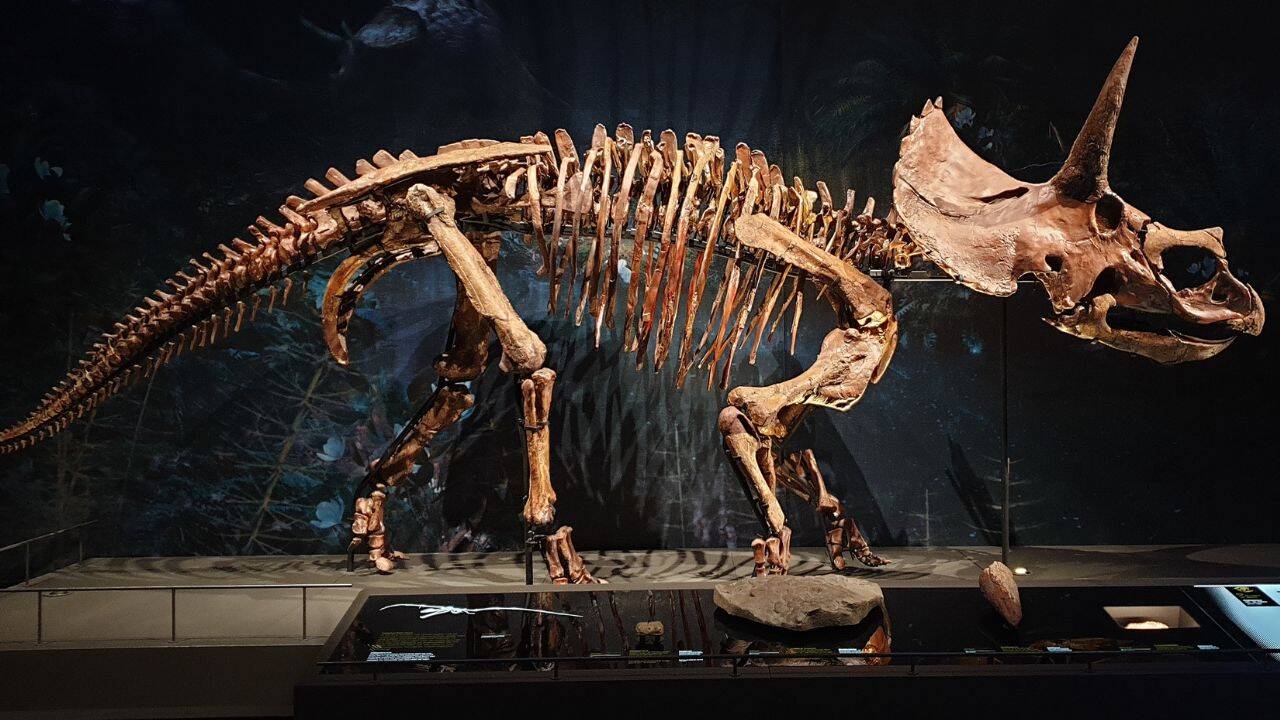
Representative Image of Fossil of Dinosaur (Image Credit: Canva)
Then, technicians remove the leftover rock from each bone, usually with small hand tools, working a little at a time so the fossil is not damaged. Cracked or loose pieces are glued and held together so they don’t break further. Each bone is then cleaned, recorded and studied by scientists, who measure it and compare it with other finds. Work like this can take a long time for a single bone, and the three Wyoming sauropods, excavated between 2023 and 2025, still have a lot of it ahead of them.
The donor behind the gift
Griffin is the founder and CEO of Citadel. The dinosaur news came shortly after another large gift in Pittsburgh. Carnegie Mellon University recently received a $3 billion donation from him, mostly to help build a new campus in Miami, Florida. CBS describes it as the largest gift by an individual in the history of higher education.In his statement, Griffin said Daisy, Lucky and Lucy offer a window into the planet’s history. He said he hopes the experiences at the museum will spark curiosity and inspire the next generation of scientists.