
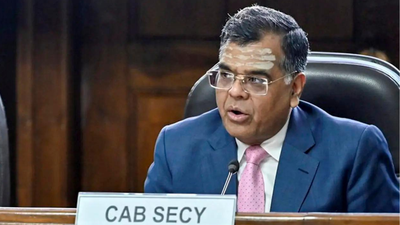
NEW DELHI: Civil servants have a constitutional duty to remain politically neutral, but they should learn administrative skills of extraordinary leaders, cabinet secretary T V Somanathan said on Wednesday, drawing on his experience of working with PM Narendra Modi and former Tamil Nadu CM M Karunanidhi.Addressing a leadership workshop for civil servants, Somanathan said elected heads of govt combine political and administrative leadership, and while bureaucrats must stay away from politics, they should learn from the latter aspect of their leadership.“While staying away from the political aspect, we can and should learn from the administrative skills of extraordinary leaders and that is the purpose of this workshop,” he said.Somanathan, who served as secretary to CM under Karunanidhi for around four years and worked in PMO for two-and-a-half years as joint secretary and additional secretary, said the longevity of the two leaders as heads of govt reflected extraordinary leadership skills. Karunanidhi held office for over 19 years, while Modi has completed 25 years as head of govt.Sharing lessons on leadership and governance, he said the questions senior officers raise during review meetings shape the priorities of officials down the administrative chain. If reviews focus only on expenditure, districts will concentrate on spending, but asking how many beneficiaries have actually received the intended benefits would shift attention towards outcomes.The Cabinet Secretary also emphasised the importance of listening directly to citizens rather than relying entirely on information filtered through several layers of administration. “Every senior officer needs a few sources of information that have not been summarised by anyone,” he said, citing field visits, reading individual grievances and meeting visitors as ways to understand problems that may not figure in official reports.On decision-making, Somanathan said files should not be viewed as obstacles, as recording reasons, facts and options considered gives decisions legitimacy and helps them withstand scrutiny. “A sense of mission in the civil service must therefore work hand in hand with a sense of propriety and due process,” he said. Officers should not avoid taking decisions when file notings and advice differ, but must record cogent reasons before proceeding, even if it means overruling objections.
Somanathan also urged senior officials to delegate authority and stand by juniors who take decisions in good faith. “Officers will use the authority they already have only when they are confident that their seniors will not leave them to face the consequences alone when something goes wrong,” he said.On the need for course correction, he said well-reasoned changes in implementation should be seen as evidence of a programme learning from experience, rather than a deviation. The cabinet secretary also said leadership should also be judged by whether work continues effectively after an officer is transferred, stressing the importance of proper handover notes and institutional continuity.Somanathan urged officers to take decisions in public interest, record their reasons clearly and ensure that successors and reviewing authorities understand the rationale behind them.