
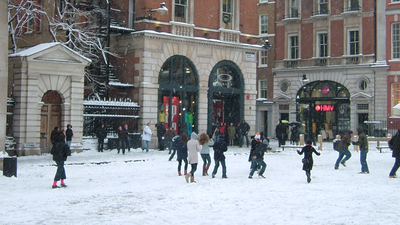
London could face a spell of unusually cold weather this winter as a disruption to the polar vortex raises the possibility of Arctic air moving towards the UK. The polar vortex, a vast circulation of cold air high above the Arctic, can influence winter weather patterns when it weakens or becomes distorted, potentially allowing colder air to reach lower latitudes. Meteorologists are also monitoring the developing El Niño phenomenon and its possible influence on atmospheric circulation. The prospect of a colder spell has revived memories of the 2018 ‘Beast from the East’, when freezing temperatures and heavy snowfall swept across Britain, disrupting transport, closing schools and affecting daily life.
What is polar vortex?
The polar vortex is a large circulation of strong winds surrounding the Arctic during winter. The stratospheric polar vortex forms high above the Earth’s surface, approximately 16 to 48 kilometres up, where temperatures over the North Pole become extremely low. The circulation helps shape atmospheric patterns that influence weather in the Northern Hemisphere.When the polar vortex is strong, its winds generally circulate from west to east around the Arctic. When it weakens, becomes distorted or splits into separate circulations, it can influence the jet stream and change the movement of weather systems.These changes can sometimes allow cold air to move southwards towards Europe, increasing the potential for winter cold spells. However, a weakened polar vortex does not automatically result in freezing temperatures or snowfall in the UK. The outcome depends on how the wider atmospheric circulation responds to the disruption.
How can a polar vortex disruption affect London’s weather?
A major disruption of the polar vortex can influence the jet stream, a band of strong winds in the upper atmosphere that helps steer weather systems across the UK.In some circumstances, the jet stream becomes more meandering, while areas of high pressure develop over parts of the North Atlantic or Scandinavia. This pattern can encourage cold easterly or northerly winds to reach Britain instead of the relatively mild westerly winds that frequently bring Atlantic weather systems.If such a pattern develops and persists, London could experience lower temperatures, overnight frost and a prolonged cold spell. Snow is also possible if temperatures, moisture and other atmospheric conditions align.However, the effects vary from one event to another. Some polar vortex disruptions have limited consequences for surface weather, while cold spells can also occur without a major disruption.
Could London experience another ‘Beast from the East’?
The ‘Beast from the East’ is the name given to the severe cold spell that affected the UK in late February and early March 2018. Cold air from continental Europe moved towards Britain, bringing freezing temperatures, snow and significant travel disruption in several areas.The event was associated with a sudden stratospheric warming, which disrupted the polar vortex and contributed to changes in atmospheric circulation. The resulting weather pattern allowed cold easterly winds to reach the UK.The Met Office explains that easterly winds can transport very cold air from the Eurasian landmass towards Britain. When this air travels across the North Sea, it can pick up moisture and produce showers of rain or snow, particularly in eastern parts of the country.A similar combination of atmospheric conditions could bring another severe cold spell to Britain.
What is sudden stratospheric warming?
Sudden stratospheric warming, commonly known as SSW, is a meteorological phenomenon in which temperatures in the stratosphere rise rapidly over a short period.During a major event, temperatures can increase by as much as 50°C within a few days. The warming occurs high above the Earth’s surface and does not mean that temperatures at ground level will rise.Instead, the event can disrupt the polar vortex, weakening its winds or reversing their usual direction. These changes can gradually influence the jet stream and atmospheric pressure patterns closer to the surface.According to the Met Office, the effects of a sudden stratospheric warming can take several weeks to influence the UK’s weather. In some cases, the resulting circulation favours prolonged cold conditions and increases the potential for snow. However, not every event produces a significant change in surface weather.
How is El Niño linked to the polar vortex?
El Niño is a natural climate phenomenon characterised by warmer-than-average sea-surface temperatures across parts of the central and eastern tropical Pacific Ocean. It influences atmospheric circulation and can affect weather patterns around the world.Changes in tropical Pacific temperatures can influence atmospheric waves that travel upwards into the stratosphere. Under certain conditions, these waves can disrupt the polar vortex, potentially increasing the likelihood of sudden stratospheric warming events.The relationship between El Niño and UK winter weather is complex, however. The Met Office has noted that El Niño may increase the likelihood of stronger westerly winds, unsettled conditions and heavy rainfall in the UK during October to December 2026. In early 2027, there may be a slightly increased risk of easterly or northerly winds and short periods of colder weather.These are changes in probability rather than definitive predictions. El Niño cannot establish whether London will experience snow, how low temperatures might fall or whether a severe cold spell will occur.
What could a severe winter mean for London?
If atmospheric conditions favour a prolonged cold spell, London could experience freezing nights, frost and potentially snow. The severity would depend on the direction of the winds, the duration of the cold air outbreak and the availability of moisture.A significant freeze could also affect daily life. Snow and ice may disrupt road traffic, rail services and flights, while prolonged cold weather could increase household heating demand. Vulnerable residents, particularly older people and those struggling to afford heating, could face additional risks.However, these are potential consequences rather than confirmed predictions for winter 2026-27.
When could the polar vortex affect the UK?
The timing and consequences of a potential polar vortex disruption remain uncertain. Although some reports have suggested that weakening could begin earlier than previously anticipated, a change in stratospheric winds does not establish when or whether London will experience freezing weather.The Met Office says individual sudden stratospheric warming events can generally be predicted reliably only about a week in advance. Their effects on surface weather may take several weeks to emerge.Meteorologists will therefore monitor developments in the stratosphere alongside the jet stream and pressure systems over the North Atlantic and Europe. These factors will help determine whether conditions become favourable for cold air to reach Britain.The distinction is important: an atmospheric disturbance is not the same as a forecast of snow or freezing temperatures for London. More specific predictions will depend on how the weather pattern develops as winter approaches.
What is the outlook for winter 2026-27?
The outlook remains uncertain, with El Niño and the polar vortex representing two of several factors that could influence Britain’s winter weather.A report published by the UK Government’s Office for Science on September 17, 2026, said a significant El Niño was likely to develop towards the end of the year. It noted that the effects on UK weather were less certain than those in some other parts of the world.The assessment suggested a slightly increased chance of stronger westerly winds and unsettled conditions between October and December 2026, followed by a slightly increased risk of easterly or northerly winds and cold spells in early 2027.