
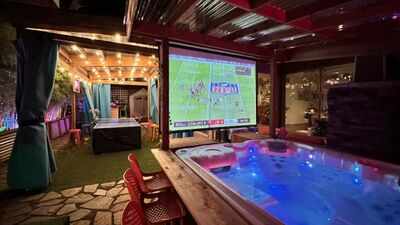
When Rob Nachbar bought his Portland, Oregon, home in 2015, the backyard was little more than a patch of grass with a hot tub. By 2019, the grass was worn out, and an early redesign using pea gravel and flagstone made the space even less usable. Then the pandemic arrived, giving Nachbar and his family both time at home and a reason to rethink how they lived outdoors. What followed was a five-year, hand-built transformation of an 800-square-foot yard into a covered, colourful entertainment space called Pong Springs. According to Realtor.com, the project cost $48,412, while Axios reported that by 2025 the backyard had generated about $85,000 through hourly rentals on Swimply.The result is not a conventional garden makeover. Nachbar turned a small 20-by-40-foot yard into four covered zones: a hot tub area, a fire deck, a pavilion with a ping-pong table and a grill deck. The design leans into bright colours, neon lighting and a playful Palm Springs-inspired mood, making the space feel more like a private mini resort than a typical suburban backyard.
The backyard began as a problem
Nachbar initially tried to improve the yard with help from a landscaper friend, but the removal of all the grass and its replacement with pea gravel created a practical problem for a family with a young child. During the pandemic, he watched his wife’s five-year-old daughter kicking gravel around the yard and worried that a stone could break a window. That moment convinced him that the space needed to be completely rebuilt rather than simply redecorated, as per the reports.The first step was physically demanding. Nachbar and others removed the gravel, dug out the yard by hand and dealt with a pile of displaced soil that grew into an eight-foot mound. After compacting and levelling the ground, they installed artificial turf, a choice that eliminated the need to mow a very small lawn and created a cleaner base for the rest of the project. From there, the project developed without a rigid master plan. Nachbar had been collecting wooden pallets to build a deck, but he soon realised those materials would not last. A builder friend helped him create stronger structures using pressure-treated lumber, including a cantilevered fire deck and grill deck topped with polycarbonate roofing. The hot tub structure came last, completing a backyard where nearly every area except the walkways is covered.
Why covering the yard mattered
Portland’s wet climate shaped many of the design decisions. Nachbar covered most of the yard so that rain would not prevent the family from using the hot tub, fire area, grill space or ping-pong pavilion. The roofs allow the backyard to be used throughout the year, except during snow, and turned a small outdoor area into a set of weather-resistant rooms.Privacy was another priority. The property is surrounded by neighbours on every side, and the rear neighbour previously had a clear view into the yard. Nachbar added cedar privacy walls and bamboo planters, which filled in within about a year to create a more enclosed and intimate setting. He said the space is now private on all sides, even though nearby sounds can still be heard.The finishing touches gave Pong Springs its personality. Nachbar added extensive lighting, including neon signs, and embraced a deliberately kitschy, colourful aesthetic. A friend coined the name after seeing the artificial turf and ping-pong table, combining the game with the Palm Springs-inspired look that Nachbar and his family enjoyed.
The $48,412 renovation budget
Realtor.com detailed the spending across the project, which Nachbar financed in cash and spread over five years rather than completing in one burst. The largest single expense was the hot tub at $11,900, followed by structures and carpentry at $10,990. Other costs included hardscaping, electrical work, heating and a fireplace, outdoor furniture, gardening, accessories, artificial turf and a kegerator.It was reported that Nachbar did much of the work himself, including running a natural gas line across the property after learning from online videos. He hired a company to install an additional electrical subpanel, while a friend with electrical experience handled much of the remaining wiring. He acknowledged that the project involved mistakes, including choosing a grout between flagstone pavers that later became crumbly, but said doing the work personally saved a significant amount of money.
Turning a private yard into rental income
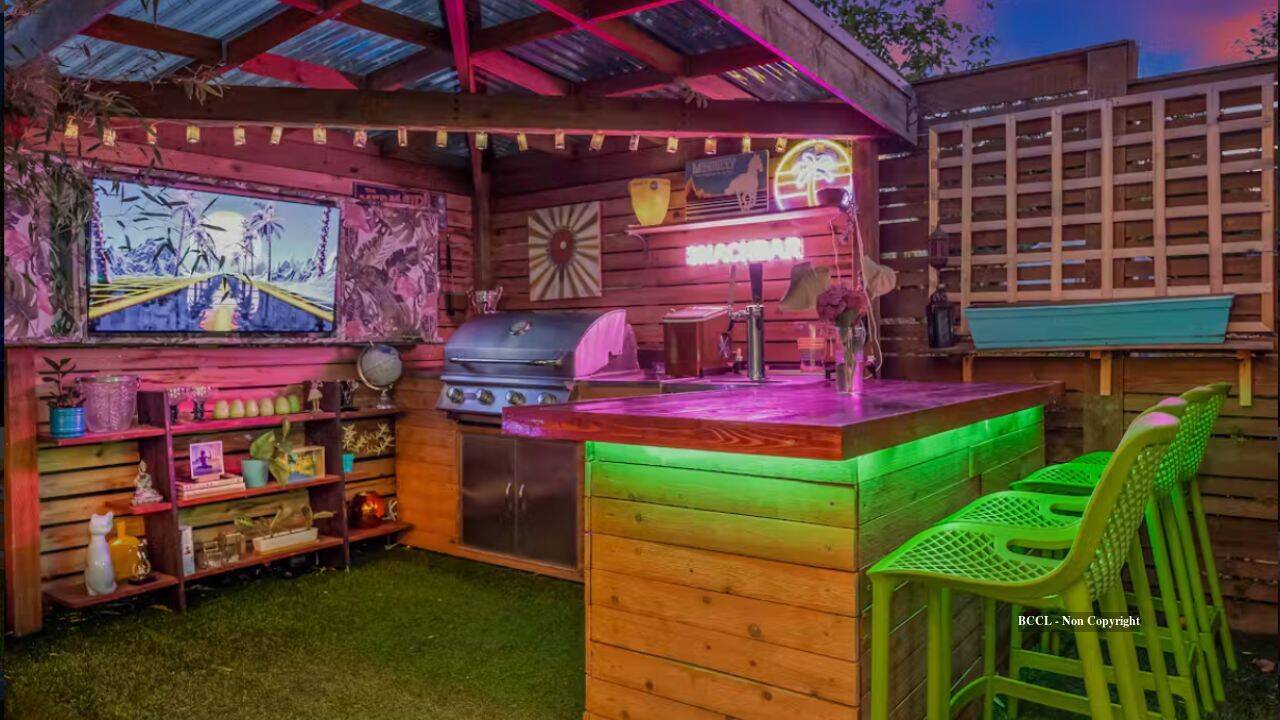
Photo credit: swimply.com
The rental idea began during the pandemic, when public pools were closed. A neighbour told Nachbar about Swimply, a platform that lets owners rent private pools and outdoor amenities by the hour. After booking a Swimply pool for his own family, he began wondering whether his backyard could work as a rental space too. The answer was ‘yes’. Pong Springs is listed on Swimply and attracts guests looking for unusual places to gather, including bachelorette parties, date nights and themed watch parties. Nachbar added a projector and a pull-down screen, which helped the space become popular for Love Island viewing parties, football gatherings and other social events.The income has been meaningful. Nachbar told Axios that he had generated around $85,000 over the previous couple of years, describing the rental business as a steady side income that essentially pays the household mortgage. In the Realtor.com interview, he said the backyard had earned $106,000 in total over five years, or roughly $20,000 to $21,000 annually.
How the bookings work
Rentals are booked by the hour, with a two-hour minimum. A busy weekend may include two reservations each day, while a typical month brings 10 to 15 bookings. Nachbar deliberately blocks many dates so his family can still enjoy the backyard, meaning the space is not constantly available to strangers.Demand is seasonal rather than uniform. He said the yard is busiest in spring and autumn, while fewer people seek a hot tub experience during July. The covered design helps reduce weather-related cancellations, but the appeal of an outdoor hot tub and fire deck still rises and falls with Portland’s cooler months.
A wider rental trend
Nachbar’s backyard fits into a broader shift in how people use private amenities. Axios reported that Swimply has expanded beyond summer pool rentals with a winter category called Igloos, featuring about 1,500 listings nationwide for hourly rental. The platform said nearly 100 hosts in a beta programme between September 2024 and May 2025 each earned more than $10,000, with some top earners approaching $100,000 in revenue.The idea is simple: a costly home feature such as a pool, sauna or hot tub can become a source of income when it is rented to people who want the experience without the expense or upkeep of ownership. For guests, it offers a private alternative to crowded public facilities. For hosts, it can turn an underused backyard into a small hospitality business.Nachbar’s experience shows that the opportunity does not require a huge property. His yard is only 800 square feet, yet careful coverage, privacy screening, flexible seating and a distinctive theme helped it stand out. The project also illustrates the trade-off behind such ventures: the income did not appear overnight, and it came after years of construction, maintenance and hosting responsibilities.For the Nachbar family, though, the investment has delivered more than money. The backyard is now a low-maintenance place for their own gatherings, a private retreat in a dense neighbourhood and a rental space that pays a substantial share of the household bills.