
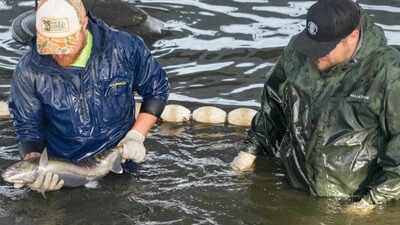
A salmon hatchery programme started with a few hundred returning fish in Washington state has grown into an operation recording thousands of salmon every year. The Puyallup Tribe’s Clarks Creek Salmon Hatchery recorded more than 6,300 Chinook salmon and 6,893 coho salmon returning in 2026, marking a record season for Chinook.The programme began in 2005 and has gradually expanded through improvements to the hatchery and work to improve fish habitats, according to the tribe’s website. The increase in returning salmon has also changed what the facility can do. It now collects its own eggs every year instead of depending on supplies from other hatcheries to sustain its operations.The progress is also allowing the tribe to support other fisheries programmes. In October, the Puyallup Tribal Fisheries Department supplied coho salmon eggs to the Suquamish Tribe, which was struggling with a shortage. It was the first time eggs from the Clarks Creek facility had been transferred to another tribe and watershed.Meanwhile, another round of construction is underway at Clarks Creek. The new facilities are designed to increase the number of fish the hatchery can handle and reduce the effort required from workers during collection. They are expected to become operational in June 2027.
A record season for Chinook
The latest returns represent a significant change from the hatchery’s early years. When the programme started in 2005, only a few hundred salmon made their way back. The numbers have increased gradually since then.By the end of October, Chinook returns had exceeded 6,300, setting a new record for the hatchery. Coho numbers had also reached 6,893. Of the returning coho, 5,981 adult fish had been moved into local streams.Blake Smith, fisheries enhancement chief for the Puyallup Tribe, attributed the improvement to two decades of work on the hatchery programme and fish habitats.The facility’s growing capacity has also reduced its dependence on outside supplies. The programme initially received eggs from the Washington Department of Fish and Wildlife and Voight’s Creek Hatchery. It has now reached a stage where it can collect the eggs needed for its operations each year.The tribe is continuing to upgrade the facility to maintain the programme for future generations. The latest construction project focuses on broodstock ponds, where returning adult fish can be handled for breeding purposes.
How young salmon make their way back
The hatchery programme follows the natural life cycle of salmon, with the facility helping raise young fish before they are released into the wild.Chinook, coho and chub salmon begin their lives in freshwater streams. They later move to the ocean and return to freshwater locations to reproduce. Their return periods differ: Chinook arrive between July and October, coho between September and November, and chub between November and December.When adult fish return, hatchery workers collect eggs from females and milt, which contains sperm, from males. These are used for fertilisation, with incubation beginning in late autumn or early winter.For Chinook, hatching takes approximately 85 days. The newly hatched fish are called alevins and initially have yolk sacs attached to their bodies. They depend on these sacs for nourishment. After the sacs are used up, the young fish are called fry and are transferred to artificial channels known as raceways.They continue developing there before reaching the smolt or yearling stages. In February or March, hatchery workers mark them using coded wire tags and fin clipping. These markings help identify the fish and collect information about their movement.The young salmon are released into the wild during spring, when they begin travelling towards the ocean. Fish raised at Clarks Creek are mainly caught by tribal fishers near Vancouver Island and the Strait of Juan de Fuca. Some have been found as far south as Brookings in Oregon.
New systems to reduce work at the hatchery
The next phase of development at Clarks Creek is aimed at changing how workers handle returning fish. At present, employees have to catch the fish individually using nets. The work is physically demanding and takes considerable time. The planned equipment will automate several parts of the process and allow staff to spend less time handling individual fish.The new broodstock ponds will include automatic fish crowders. These systems use moving barriers to direct fish towards a smaller collection area. An electro-anesthesia system will temporarily stun fish, making them easier to collect.Another addition will be an Archimedes screw, a mechanism that moves fish upwards towards the water surface or collection containers.The changes are expected to increase the number of fish that can be processed while reducing stress on them. Staff will also be able to carry out collection work without entering the water.The ponds will have automatic fish-counting systems as well. An overhead structure and sprinklers are planned to limit exposure to sunlight and help control water temperatures.The new facilities are scheduled to open in June 2027, shortly before Chinook begin returning to the hatchery in July.
Coho eggs help another tribe address shortage
The Puyallup Tribe’s growing coho supply has also enabled it to assist the Suquamish Tribe with its hatchery programme.Suquamish fisheries representatives visited Clarks Creek on October 27 to collect eggs after facing a shortage of coho. The tribe needed 60,000 eggs for its programme.The shortfall followed a decision to remove some eggs during a process intended to ensure healthier fish for reintroduction. Suquamish had also recorded fewer returning Chinook than expected. This left additional space in its hatchery, which the tribe decided to use for raising more coho.The eggs supplied by Puyallup will help the Suquamish programme work towards releasing up to 480,000 healthy, delayed-release coho smolts through its Agate Pass net pen programme. The fish are intended to support tribal fisheries as well as recreational and commercial fishing.The transfer followed a review process involving the managers of the coho fishery. The eggs were kept separate from other fish and the surrounding environment while health checks were pending. Samples were being examined for viruses and bacteria, and any eggs found to be infected would have to be destroyed.The transfer also reflects cooperation between tribes in Washington state on fisheries and wildlife management. Such arrangements developed further after the 1974 Boldt Decision required state and federal authorities to recognise tribal access to ancestral fisheries.