

Dubious creams that promise quick lightening abound. Many contain mercury at dangerously high levels.The critical dangers of applying dubious fairness creams came to light last week after a 17-year-old girl from Kerala developed a kidney disorder because of mercury poisoning from one such cream. Nephrologists say it’s not an isolated instance. Unregulated skin-lightening products with unsafe amounts of mercury have been sold and endorsed on social media for a long time, with dark side effects that emerge months later.“Excessive mercury from these creams gets absorbed into the body, leading to membranous nephropathy (MN) in the kidneys. We have seen a few such cases in our OPD,” says AIIMS Delhi nephrologist Dr Sandeep Mahajan.The Kerala girl bought the fairness cream online after seeing how it cleared up her classmates’ skin. “I had severe, painful acne that disappeared after applying the cream. But whenever I stopped using it, the acne returned. So, I continued for almost a year,” she told TOI.Within months, her face became puffy and her feet became swollen, but she kept using the cream till she fell unconscious at home one day. Rushed to hospital, tests revealed MN, in which excessive protein is lost through urine. Doctors suspected the fairness cream she was using, and chemical analysis detected 12,500 parts per million (ppm) of mercury in the product, against a permissible limit of 1 ppm for cosmetics in India, that too, as an unintentional trace component.
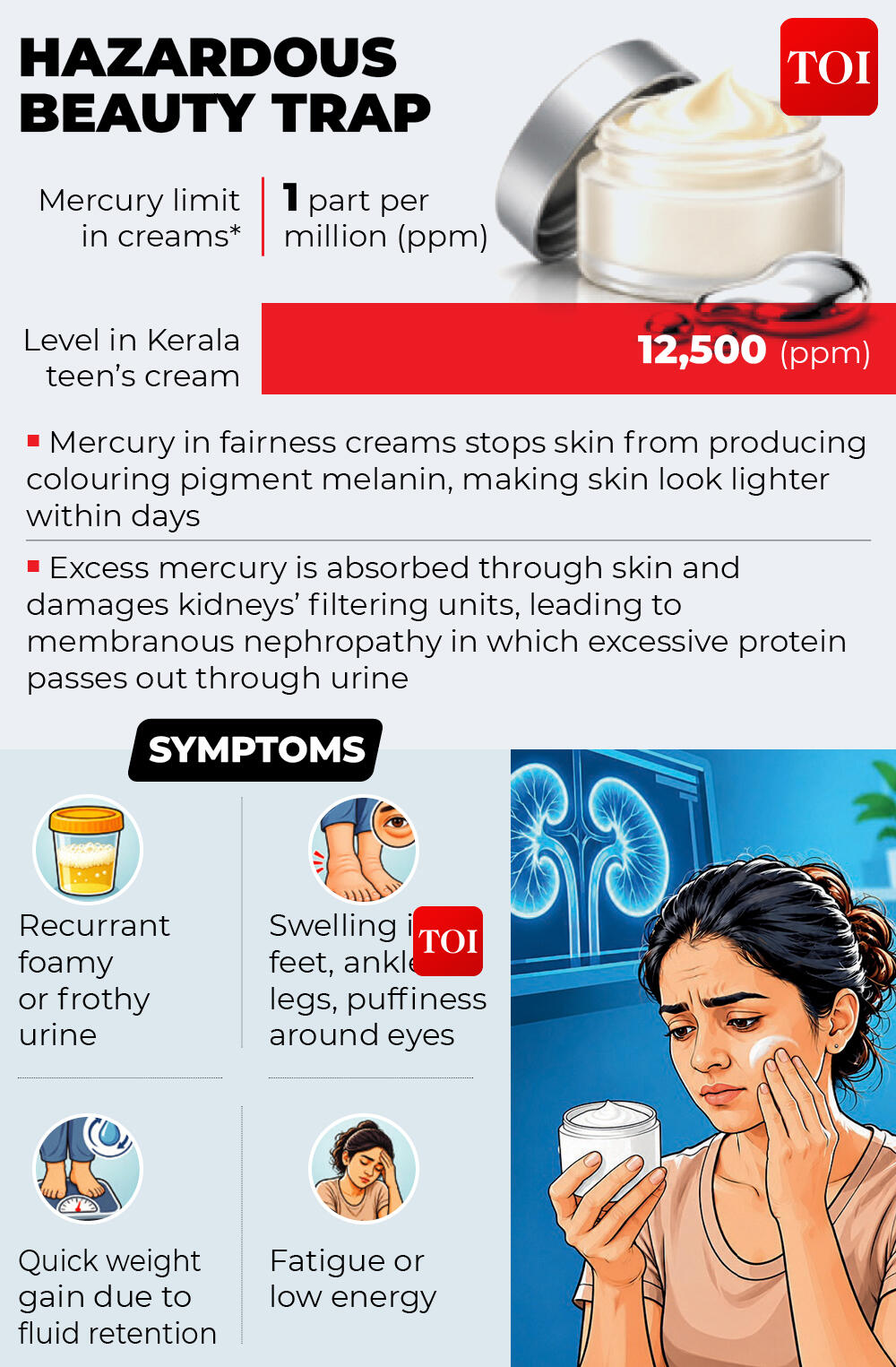
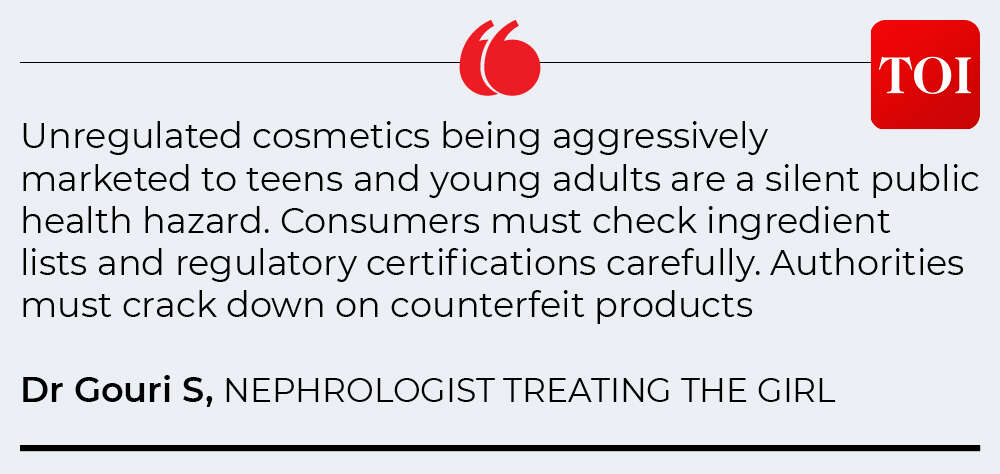
Mercury is used as an ingredient in fairness creams as it blocks production of the skin-colouring pigment melanin, causing skin tone to lighten. Environmental advocacy firms are pushing for a ban on the sale of such creams.“Unregulated cosmetics aggressively marketed to teens and young adults are a silent public health hazard,” says nephrologist Dr Gouri S of Aster MIMS Mother Hospital, Areekode, who is treating the minor girl. “Consumers must check ingredient lists and certifications before using skincare products and the government must crack down on counterfeit ones.”In 2023, nephrologists at Aster MIMS, Kottakkal, had seen many MN cases, among them a 14-year-old girl whose report showed NELL1 positive, a very rare form of MN. She developed nephrotic syndrome (symptoms caused by damage to the kidneys’ filtering units), perplexing doctors as the only thing she had been doing differently in the past weeks was using a fairness cream. Around the same time, her relative also came to the hospital with foot swelling, a classic nephrotic syndrome symptom. A kidney biopsy showed she too was NELL1 positive. She was also using a fairness cream.
“We looked at eight such patients who confirmed using fairness creams,” says Aster MIMS nephrologist Dr Sajeesh Sivadas. Reports showed their mercury and lead levels were over 100 times higher than normal (0.21-1.3 micrograms per litre for mercury and less than 150 for lead). Testing for the NELL-1 antigen in kidney tissue can help doctors rule out heavy metal exposure early on, says Dr Mahajan.Dr Jayant Thomas Mathew, senior consultant nephrologist at Lisie Hospital, Kochi, recalls earlier cases linked to products brought from Dubai, popularly called “Pakistani creams”, where users saw quick skin-lightening results, but some later developed MN with high mercury levels in blood and urine. “Early withdrawal can reverse damage, but delayed treatment may even lead to kidney failure,” he warns.Many cases go unreported as nobody suspects applying a cream can affect internal organs. “Such fairness creams are widely used across age and gender. Once people start using it, they can’t stop due to the rebound pigmentation trap,” says dermatologist Dr Anuradha Kakkanatt Babu.
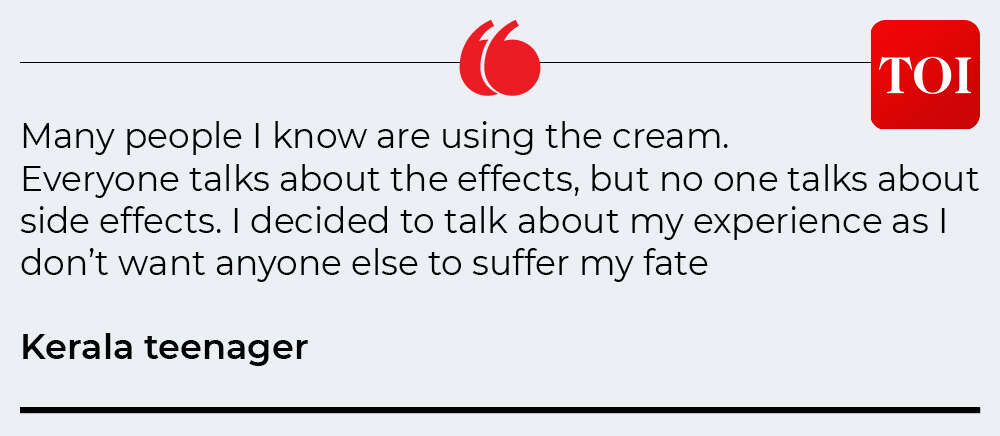
Prolonged use of steroid-based fairness creams can also cause skin thinning, visible blood vessels, redness and sensitivity, adds Dr Kabir Sardana, head of dermatology at RML Hospital, Delhi.“Awareness is key. People need to understand that if there is immediate change in appearance by applying a cream, then something must be wrong,” insists Sujith Kumar, director of Kerala’s drugs control department, which is proposing to make awareness a part of the school curriculum.But it’s easier said than done. “Many people I know are using the cream. Everyone talks about the effects, but no one talks about side effects,” says the 17-year-old girl from Kerala. “I decided to talk about my experience as I don’t want anyone else to suffer my fate.”