
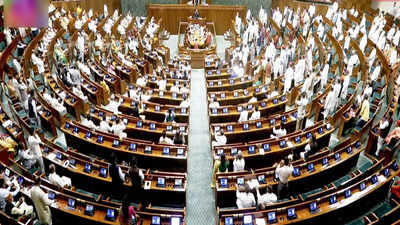
What if a party could improve its chances of winning an election simply by redrawing the map? That’s the fear driving the opposition’s concerns over delimitation. As the Centre prepares to push its legislation, parties are warning that changing constituency boundaries could reshape electoral battles in the BJP‘s favour ahead of the 2029 Lok Sabha polls. The concern has a name – gerrymandering. It means manipulating electoral boundaries to gain a political advantage.The concern goes beyond the number of MPs each state will send to Parliament. Even if states retain their existing share of Lok Sabha seats, redrawing boundaries within them could change which voters are grouped together, weaken established political strongholds and alter the outcome in individual constituencies. The opposition fears this could give the ruling party an advantage without changing a single vote or removing anyone from the electoral rolls.Leader of opposition in the Lok Sabha Rahul Gandhi has accused the BJP of seeking to redraw India’s electoral map to its advantage ahead of the 2029 general elections. The concern is that even if states retain their existing relative share of Lok Sabha seats, the way constituencies are carved out within each state could influence which parties and communities have a greater chance of winning.
What exactly is gerrymandering
In simple terms, gerrymandering is the practice of drawing constituency boundaries in a way that helps one political party win more seats than its overall support among voters might otherwise allow.There are two common ways this can happen.Packing involves concentrating voters likely to support an opposing party into a small number of constituencies. This allows that party to win those seats by large margins but reduces its influence in neighbouring constituencies.Cracking involves splitting a group of voters across several constituencies so that they become a minority in each. This makes it harder for them to elect candidates representing their preferences.In both cases, no voter needs to be removed from the electoral rolls. The advantage comes from changing how voters are grouped geographically. A party can therefore win a larger share of seats without necessarily securing a corresponding increase in its overall vote share.
Where did the term come from
The word has its origins in the United States in 1812 and is a combination of the name of Massachusetts governor Elbridge Gerry and the word ‘salamander’.Gerry signed a bill that redrew the state’s senate electoral districts in a way that benefited his Democratic-Republican Party. One of the oddly shaped constituencies was compared to a salamander in a newspaper cartoon published by the Boston Gazette on March 26, 1812. The term ‘Gerry-mander’ was born.Gerry himself reportedly found the proposal ‘highly disagreeable’ and lost the next election. His party, however, retained control of the legislature.The term has since come to describe the use of electoral boundary changes as a political tool.
Why is the opposition worried about delimitation
Delimitation is not limited to deciding how many parliamentary seats a state should have. It also involves redrawing the boundaries of individual constituencies within states.The opposition’s apprehension is that the second part of this exercise could be used to alter electoral arithmetic. By changing which areas and voters fall within a constituency, boundary changes can weaken established political strongholds, divide concentrated voter groups or bring together populations with different voting patterns.This is why the opposition argues that protecting the relative share of Lok Sabha seats allocated to states may not be enough. Even if the overall representation of a state remains unchanged, the distribution of voters across its constituencies could change significantly.The opposition has cited the delimitation exercises in Assam and Jammu and Kashmir to question how constituency boundaries may be redrawn. These examples have become part of its argument for greater transparency and safeguards. However, changes in constituency boundaries or their political consequences do not, by themselves, establish gerrymandering. That would require evidence of deliberate manipulation for electoral advantage.
Assam: How boundary changes can alter electoral arithmetic
Assam’s 2023 delimitation offers an example of how redrawing constituency boundaries can change the political landscape without increasing the total number of seats or removing voters from electoral rolls.The exercise retained the state’s 126 assembly seats but changed their distribution and boundaries. Barak Valley’s tally fell from 15 to 13, while Barpeta went from eight constituencies to six. The Bodoland Territorial Region gained four seats, taking its total from 11 to 15.The reservation pattern also changed. SC-reserved seats increased from eight to nine and ST-reserved seats from 16 to 19. Goalpara West became an ST-reserved constituency, while Barpeta and Naoboicha were designated SC-reserved seats.The redrawing also altered the concentration of voters across constituencies. According to the figures cited in the delimitation analysis, the number of Muslim-dominated constituencies declined from around 35 to 24. This changed electoral arithmetic in areas where the Congress and the All India United Democratic Front (AIUDF) traditionally had a strong base.The exercise was officially aimed at improving representation and reducing disparities in constituency size. The gap between the smallest and largest constituencies, measured by electors, narrowed from 3.54 times to 3.15 times, though significant differences remained.The Assam example illustrates why the drawing of boundaries matters politically. A constituency can retain its name or number while its voter composition changes, potentially altering the parties and communities that have a decisive influence over its outcome. It does not, on its own, prove that the exercise was gerrymandered.
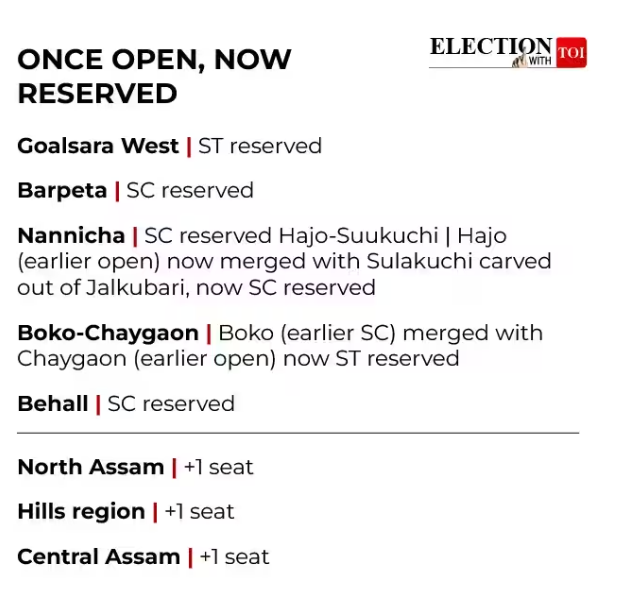
Assam’s seats after delimitation
Who decides constituency boundaries in India
The task is assigned to a high-powered body called the Delimitation Commission. In India, such commissions have been constituted four times under the Delimitation Commission Acts — in 1952, 1963, 1973 and 2002.The commission’s orders have the force of law and cannot be challenged in court. They come into effect on a date specified by the President. Copies are laid before Parliament and the state assemblies concerned, but these legislatures cannot modify the orders.This makes the composition, independence and working of the commission important to the current debate. The Opposition wants assurances that the process will be impartial and that constituency boundaries will not be drawn to benefit the party in power.
Why the seat increase has not settled the debate
The Centre’s proposed 50% increase in Lok Sabha seats and the assurance that states’ existing relative share of seats will be protected address one part of the delimitation debate. But the opposition argues that the absolute difference in representation between states will also matter.
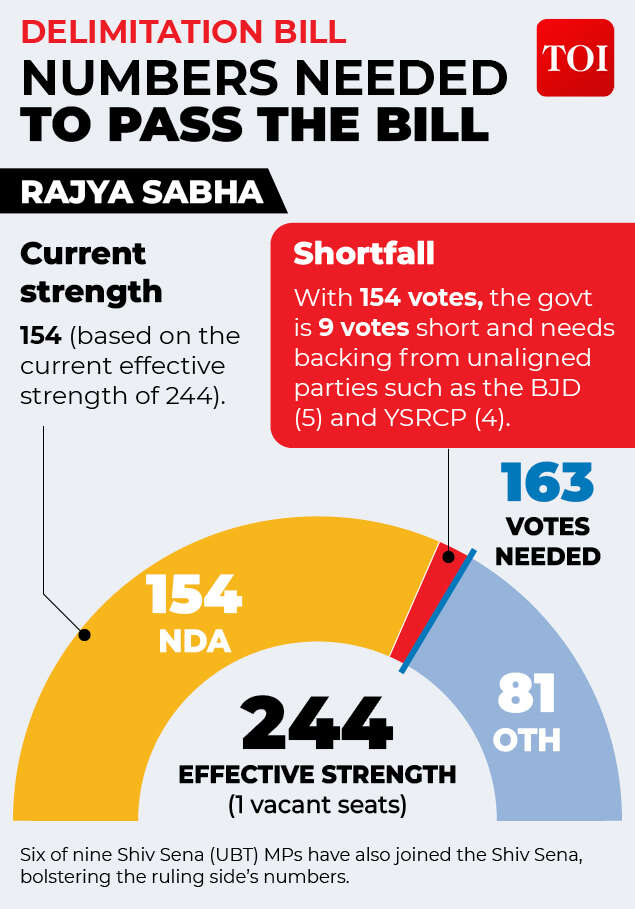
The number game in Parliament
Rajya Sabha Leader of Opposition Mallikarjun Kharge has said that retaining the present relative proportion of each state’s seats for 25 years would address two of the opposition’s concerns, but not its ‘first and fundamental concern’.“The proposed Constitution Amendment Bill has been unveiled. The ‘freeze’ for 25 years of the present relative proportion of each State to the total seats of the Lok Sabha will address two of our concerns. However, the Bill does not address the first and fundamental concern. While the relative proportion of each State to the total is important, absolute numbers also matter. The increase of 50% will increase the ‘gap’ between the Southern States and the other States.
The ‘gap’ will increase from 413 to 620. The enlarged gap will overwhelm the number of MPs of the southern states,” he said.The debate, therefore, has two connected but distinct dimensions – how parliamentary representation is distributed among states, and how constituency boundaries are drawn within them. While the first determines the number of MPs a state sends to the Lok Sabha, the second can influence who those MPs are and which voters help elect them.That is why the opposition’s questions go beyond the increase in Lok Sabha seats. It wants clarity on the rules, the data and the safeguards governing the redrawing of India’s electoral map. At the heart of the gerrymandering debate is a simple question – will delimitation merely redraw constituencies to reflect population and ensure fair representation, or could the new boundaries also reshape the electoral contest in favour of those in power?