
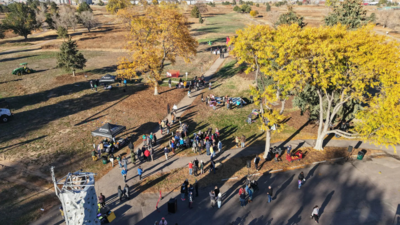
Denver is moving ahead with plans to turn the former Park Hill Golf Course into a major public green space, appointing a prominent landscape architecture firm to lead its design while taking steps to safeguard the property against future development. The decision follows years of debate over the site’s future, culminating in a 2023 vote in which Denver residents rejected a proposal to develop the land. The announcement was reported by Axios Denver and The Denver Gazette on October 13, 2026. Both outlets said Mayor Mike Johnston had selected Michael Van Valkenburgh Associates (MVVA) to oversee the design of the 155-acre Park Hill Park, with the city also pursuing formal protections to preserve the land for public use. The project marks a significant stage in the transformation of a former golf course into a regional park intended to serve residents across Denver.
A new future for a contested site
Located in northeast Denver, the property operated as a golf course from the 1930s until its closure in 2018. Its future became a subject of public debate after the former owner explored plans for a mixed-use development.In 2023, voters rejected a development measure by 58.8% to 42.2%, reinforcing opposition to converting the site into a commercial and residential project. A conservation easement dating to the late 1990s had also restricted the property’s use, meaning a change in its purpose required voter approval. Denver subsequently pursued a land exchange with Westside Investment Partners, the company that owned the former golf course. Under the agreement approved by the City Council in 2025 and The Denver Gazette’s May 13, 2025 report, “Denver City Council OKs Park Hill land swap to create fourth-largest park,” the deal involved exchanging 145 acres of city-owned land in Adams County, near Denver International Airport, and providing approximately $12.7 million from the Denver Parks Legacy Fund as part of the transaction.
A landscape shaped around Colorado
MVVA will lead the park’s design, bringing experience from major public-space projects across the United States. Its portfolio includes Brooklyn Bridge Park in New York City, Gathering Place in Tulsa, the grounds surrounding the Obama Presidential Center in Chicago and the transformation of the former rail corridor now known as The 606.The firm’s selection followed a competitive process that attracted interest from landscape architecture practices around the world. Founder Michael Van Valkenburgh is expected to take an active role in the project. The design will build on public consultation and a framework developed by Denver Parks & Recreation. Plans identify potential features such as athletic fields, sports courts, playgrounds, walking and cycling trails, water features, natural areas and a field house. Existing stormwater detention ponds are also incorporated into the preferred site plan.Water conservation is expected to be an important consideration. The landscape concept calls for a distinctly Colorado character, with an emphasis on native and drought-tolerant plants suited to the region’s climate. The aim is to balance active recreation with open space and opportunities for visitors to experience the natural landscape.
Funding and the road ahead
The park carries an estimated budget of $100 million, although the full funding plan has not yet been finalised. Denver voters approved $70 million for Park Hill Park through the city’s $950 million Vibrant Denver Bond programme in 2025. The bond funding is expected to support the design contract, the cost of which was still being negotiated as of October 13. The City Council is expected to consider the contract later this year.Design work is scheduled to continue through 2027, with construction expected to begin in June 2028. City officials have indicated that the park could open to the public in 2029, although the construction schedule and whether parts of the site will remain accessible during the work have yet to be settled.
Protecting the land for public use
Alongside the design process, Denver plans to formally designate Park Hill as parkland. The measure would strengthen protections against future development by requiring voter approval before the property could be sold or disposed of. The designation is intended to provide long-term certainty after years of disagreement over whether the land should become a development site or remain open space.Park Hill Park is already managed by Denver Parks & Recreation and has begun welcoming visitors. The next phase will focus on turning the broad vision for the property into a detailed design, with public input continuing to inform decisions about its facilities and layout. For Denver, the project represents both the redevelopment of a large urban site and an effort to preserve land for shared public use for generations to come.