
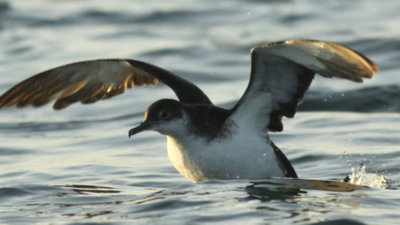
Manx shearwaters flying home from feeding trips can be nudged off course by a kind of jet lag, researchers say. It happens when a bird’s body clock falls out of step with the local time. Tracking data from Manx shearwaters on the west coast of the UK revealed that when the birds returned home to their colonies after trips over the Atlantic, their rapid eastward flights disrupted their sense of time and navigation.When humans get jet lag, we fly across time zones and feel tired and out of sync because our body clock is still running on the old time. Shearwaters seem to have a similar problem. For them, it shows up as a wrong turn over the open sea.A studyfinds that long-distance flights can throw seabirds’ internal clocks out of sync, causing navigation errors, it was published in October 2026 on the Oxford University website. It talks about how researchers in Oxford University’s Department of Biology analysed 20 years of GPS tracking data from 1,045 breeding shearwaters, covering 3,688 foraging trips. The birds set off from colonies on the west coasts of the UK and Ireland. Some flew about 1,000km west to find food. On the way home, they flew east, back to their nests.
How a slow body clock sends birds the wrong way
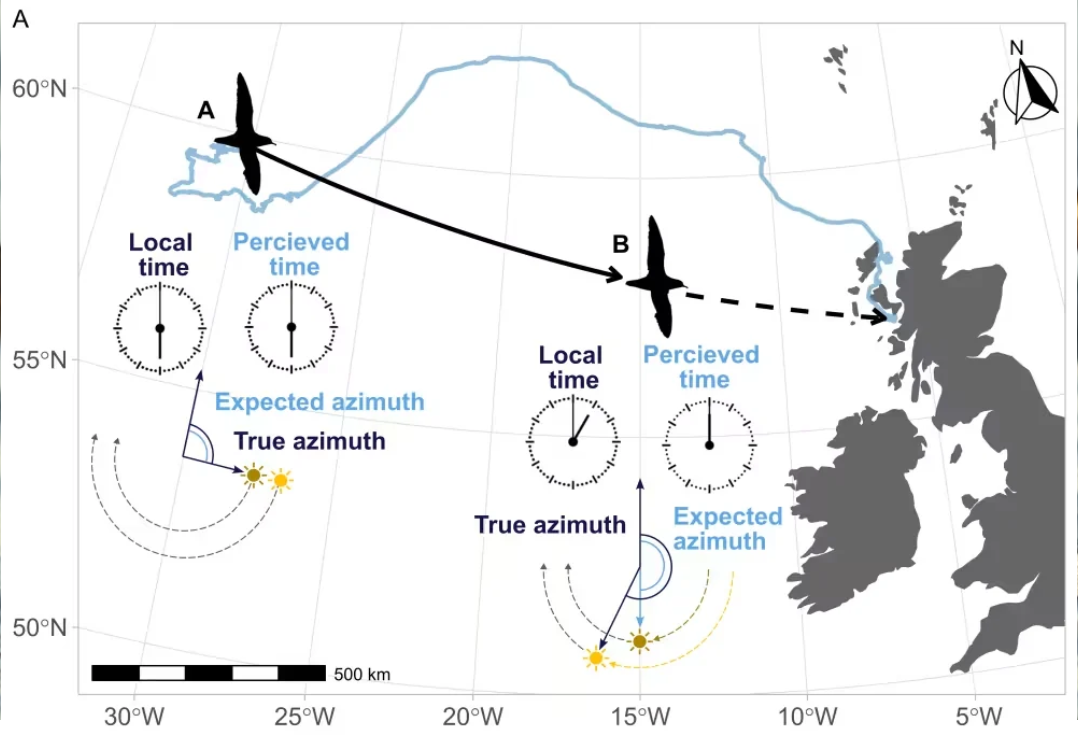
Infographic showing clock-shift that occurs during homing flights of shearwaters. The bird begins to home at point A. On the first day of homing, its endogenous clock is calibrated to local time at 30°W. However, the shearwater travels eastwards to 15°W over 6 hours to point B. Here, sunrise happened an hour earlier, so the shearwater’s perceived time lags local time by an hour and the sun is roughly 20° further clockwise than the shearwater expects. At point B, this discrepancy causes the shearwater to orient roughly 20° clockwise of the correct direction. Image Credits: Credit: Lewin et al, 2026. Oxford University
Like many animals, shearwaters use the sun as a compass. This is very useful over open water, where there are no roads or landmarks. But the sun moves across the sky during the day, so a bird needs to know the time to work out where the sun should be. The bird’s body clock gives it that information. It is called the circadian rhythm. Birds normally reset their clocks at sunrise. That works well while a bird stays in one place. But when a bird travels quickly east or west, its clock can fall out of sync with local solar time. On the flight home, the shearwaters crossed places where the sun rises earlier. The Oxford release says this can leave their clocks lagging behind local time by up to around one hour.The researchers worked out how a slow clock should change the birds’ sun compass. Then they compared those predictions with the directions the GPS trackers recorded. As the birds travelled east, they tended to drift clockwise from their expected direction. That is what you would expect if their clocks were running behind. The team from the Department of Biology found that when the predicted compass error pointed towards land, the shearwaters flew closer to the coast. When it pointed away from land, they flew further out to sea. So the birds seem to use the sun compass even when familiar land is close by.
Small errors for adults, bigger risks for first-timers
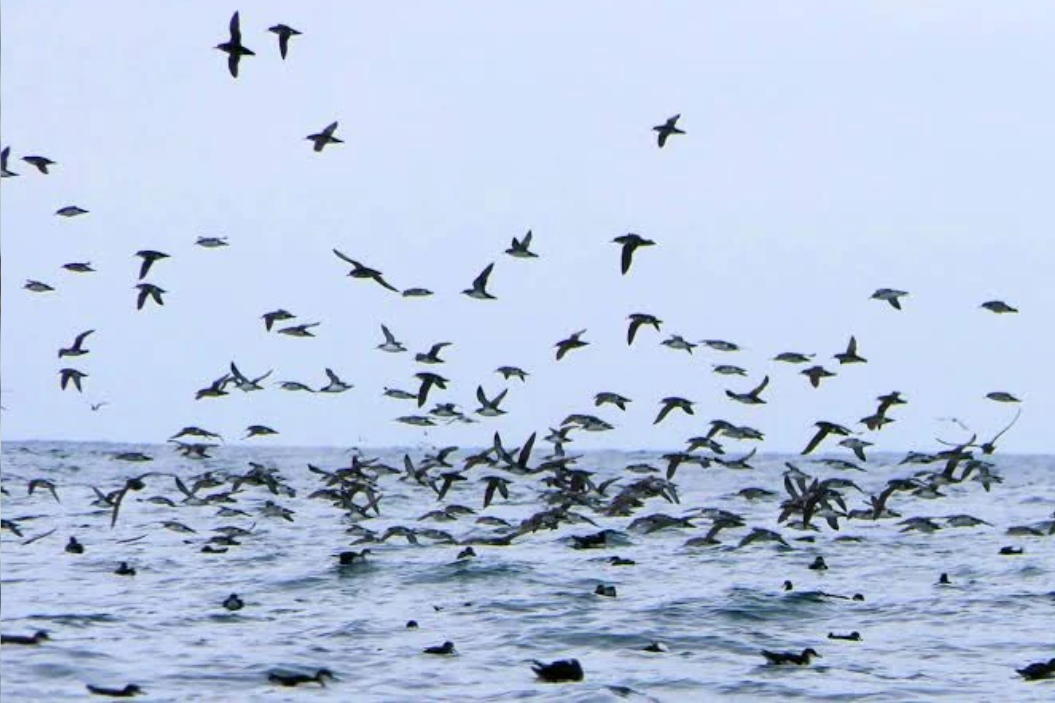
Manx shearwater in flight over sea Image credits: thelonekayaker/ wordpress
The errors were real, but they were small. In “Seabirds get jet lag, too — and it can throw them a bit off course,” published by Science News on October 29, 2026, Anirban Mukhopadhyay reports that the birds veered by as much as 15 degrees. The errors were small enough to add only a few kilometres to the journey. They were not enough to stop the shearwaters from finding their way home.Adult birds can fix their mistakes because they keep checking where they are. The Oxford team calculated that a shearwater returning from 1,000 km away with an average compass error of seven degrees would fly only about 5 km further than needed to get within 5 km of its colony.
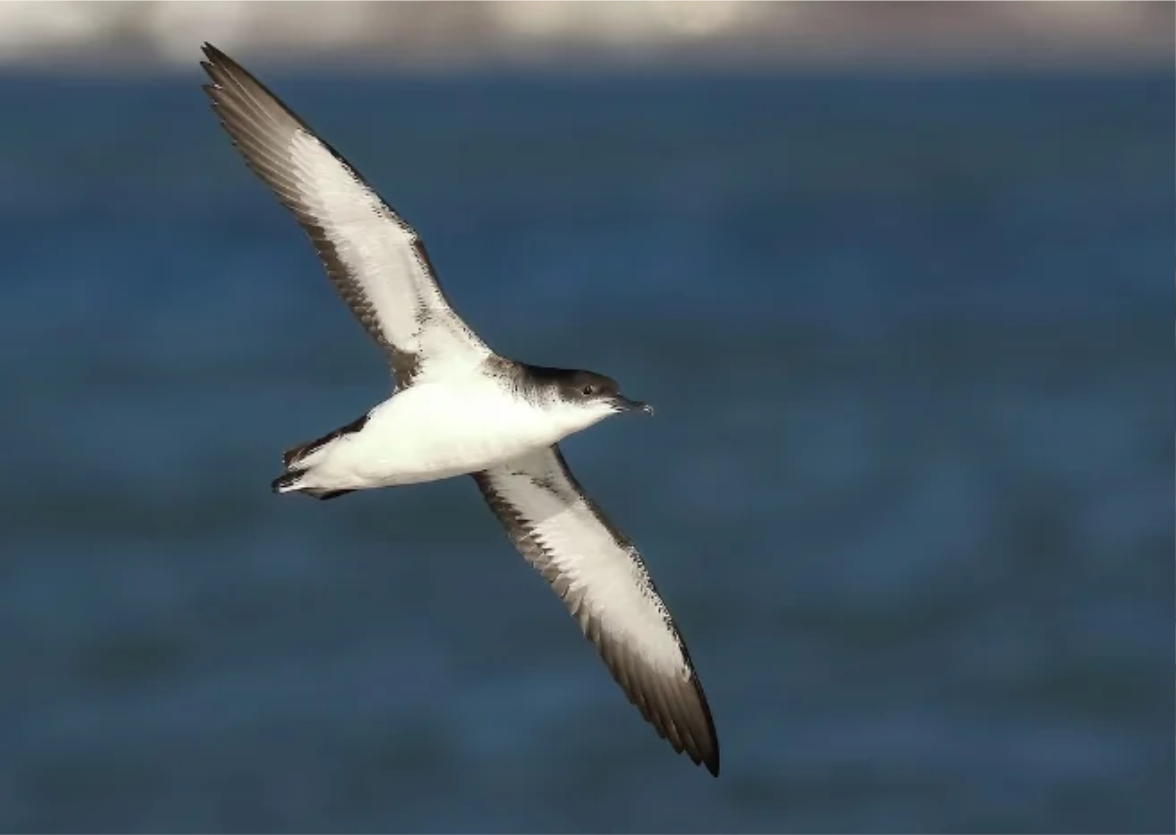
Manx Shearwater Puffinus puffinus Image credits: birdsoftheworld.org
“It’s inherently difficult to study the cognitive processes of animals in the wild, so it’s exciting to realise that if we measure their natural movements carefully enough we can reveal the underlying behavioural mechanisms.” – Co-author Professor Tim Guilford, Department of Biology, Oxford University. The consequences could be more significant for animals that cannot continuously reassess and correct their positions. For example, young birds undertaking their first migration could be particularly vulnerable. Small navigational errors might accumulate over a long journey, potentially shifting their eventual destination by hundreds of kilometres.Researchers do not yet know whether the clock mismatch affects the birds in other ways. Internal clocks control many parts of an animal’s behaviour and body, so the problem could reach beyond navigation. More work is needed to find out. Dr Patrick Lewin, the lead researcher, has said that studying animals that regularly travel long distances could one day help us understand how humans cope with jet lag. “It’s amazing to think that billions of migratory animals look up to the sun for direction, relying on clocks silently ticking away inside them, and that errors in those clocks can cause them to take tiny shifts off course. ” – Lead researcher Dr Patrick Lewin, Department of Biology, Oxford University.