
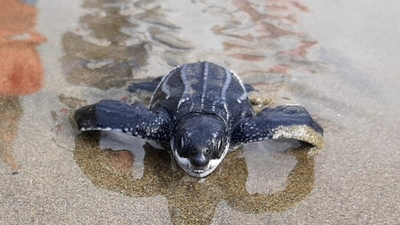
In January, under the light of a full moon and one too many streetlights, a critically endangered leatherback turtle named Bella did something both remarkable and worrying: she tried to nest on a sidewalk in Ecuador.Disoriented by nearby streetlights, the enormous female crawled over a rock breakwater and left the beach behind. She failed to lay her eggs there and returned to the ocean, still carrying them. Two nights later, she tried again, this time on a quieter stretch of sand at Playa de Crucita. There, she dug a nest, deposited 47 eggs, covered them carefully, and returned to the sea.A few weeks later, 44 hatchlings emerged and made their way toward the surf. Bella, it turned out, was only beginning. Researchers who had tagged her during her first attempt found that she nested four or five times during the 2026 season. Across all her nests, 146 eggs produced 134 hatchlings, i.e. a 91.8% success rate.For a species whose eastern Pacific population has fallen by more than 90% since the 1980s, that number is a small but powerful sign that leatherbacks may still be able to adapt, if people give them the space and protection to do so.
A species on the edge
Leatherback turtles are the largest sea turtles on Earth, capable of reaching up to three metres in length and weighing as much as a tonne. They are extraordinary travellers: unlike most sea turtles, they thrive in both warm and cold waters, migrating thousands of kilometres from tropical nesting beaches to feeding grounds in cooler, subpolar parts of the Pacific, where they feed largely on jellyfish.But the eastern Pacific leatherback population is in serious trouble. Decades of fishing bycatch, plastic pollution, vessel strikes, egg harvesting and loss of nesting habitat have combined with climate-driven pressures to push the species toward collapse. Scientists warn that, without major intervention, the eastern Pacific subspecies could disappear within 60 years.
Ecuador becomes unexpected habitat
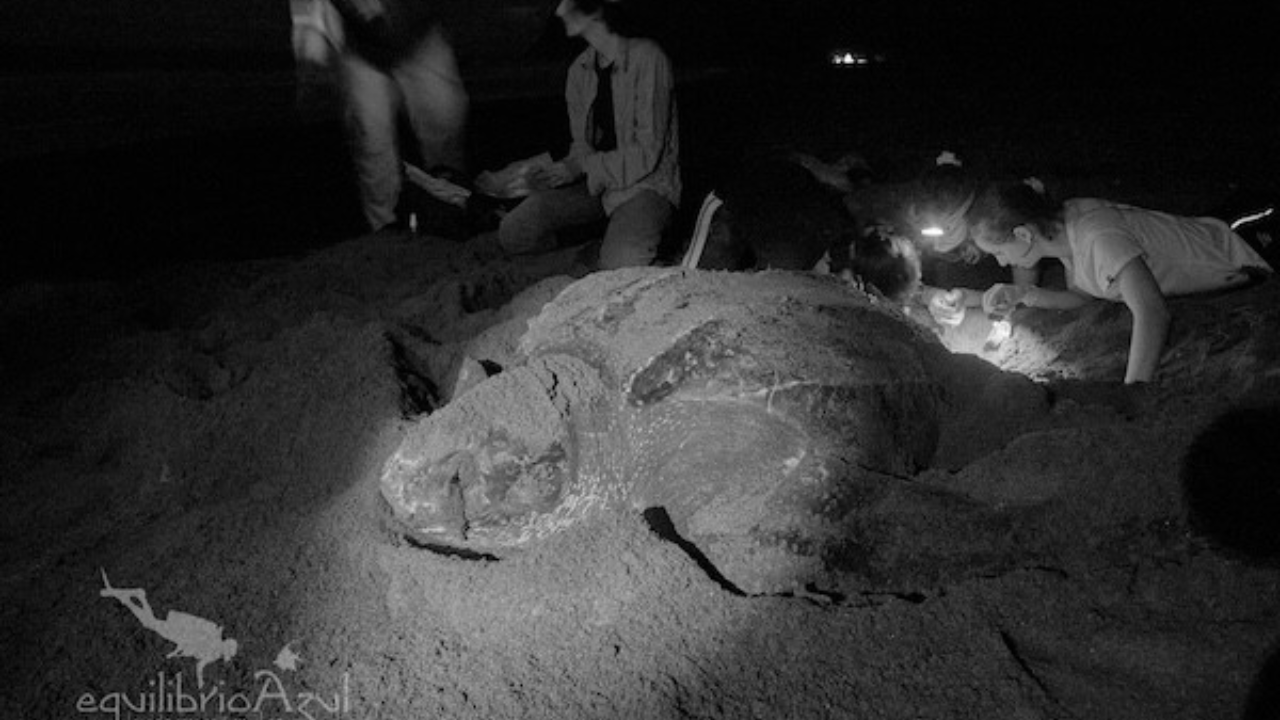
Photo courtesy: Felipe Vallejo Equilibrio Azu via Simon Fraser University
A new study led in part by Simon Fraser University marine eco-toxicologist Juan José Alava found a record-breaking number of eastern Pacific leatherback nests along several Ecuadorian beaches during the 2025–2026 nesting season. These beaches lie more than 1,000 miles south of the species’ usual nesting grounds in Mexico and Costa Rica.Historically, seeing a reproductive female leatherback on Ecuador’s coast was rare. Now, researchers believe the turtles may be adapting their reproductive cycles to take advantage of Ecuador’s coastline, particularly during cooler La Niña periods in the southeastern tropical Pacific.The researchers reviewed more than 45 years of records, including sightings of adult females, nests, hatching success, nesting attempts and strandings. They compared these records with El Niño and La Niña events, which cause major swings in sea-surface temperatures.They found that leatherback activity and nesting in Ecuador increased during cooler La Niña episodes over the past decade. Even more importantly, the number of eggs per nest and hatching rates in Ecuador were comparable to those in the turtles’ traditional nesting grounds. In some cases, Ecuadorian nests produced more hatchlings than usual.That does not mean climate change is good for leatherbacks. Rather, it suggests that some turtles may be responding to warming and shifting ocean conditions by seeking out cooler coastal areas where reproduction can still succeed. It is adaptation, but it is also a warning: species are being forced to move, and their survival depends on whether the places they move to remain safe.Bella’s first failed nesting attempt reveals another side of the problem. Leatherbacks are powerful swimmers, but on land they are vulnerable, slow and easily confused. Artificial lighting can disorient nesting females and hatchlings, drawing them away from the ocean and toward roads, buildings and other hazards.When Bella encountered streetlights near Playa de Crucita, she left the beach and climbed onto a sidewalk. Had conditions been different, she could have been injured, stranded, or unable to lay her eggs at all. Instead, she returned to the sea and found a quieter location two nights later.Conservation thus includes managing the everyday edges of coastal towns: reducing light pollution, keeping beaches clear and accessible, controlling vehicle access, and ensuring that nesting females are not disturbed.
From hatchlings to hope
Ecuador’s role in leatherback conservation is not entirely new. In 2021, nine leatherbacks hatched after their eggs were artificially incubated at Punta Bikini beach in Manabí province. Earlier that year, 60 leatherbacks had also hatched in the region. Before those successes, nests found along the Ecuadorian coast in 2015 and 2017 had not produced hatchlings.The difference now is scale and consistency. Bella’s 91.8% hatching success, alongside the wider increase in nesting activity, suggests that Ecuador may be becoming more than an occasional stopover. It may be emerging as a meaningful secondary nesting area for a population that desperately needs options.Still, researchers caution against treating this as a victory lap. A good nesting season cannot undo decades of decline. Leatherbacks face dangers long before they reach a beach and long after hatchlings enter the water: fishing nets, plastic debris, boat traffic, changing food supplies and warming oceans all remain serious threats.
What needs to happen next
The study’s authors argue that protecting Ecuador’s beaches must become a priority. That means sustained monitoring, effective coastal-zone management, efforts to reduce fishing bycatch, and conservation plans developed with local communities and Indigenous and traditional knowledge holders.It also means protecting the conditions that made Bella’s second attempt successful: dark, quiet beaches; safe nesting habitat; and hatcheries or relocation programmes only when genuinely necessary. Conservation works best when it supports natural behaviour rather than replacing it.Bella’s 134 hatchlings are not guaranteed to survive. Many will face predators, fishing gear, pollution and an ocean that is changing faster than evolution can comfortably respond. But their emergence is proof that the species is not finished yet.A turtle that briefly mistook a sidewalk for a nesting beach, then found her way back to the sand, has given scientists and conservationists something rare: hope grounded in evidence. The challenge now is to make sure that, next nesting season, Bella and turtles like her find safe beaches waiting for them, not lights, roads and obstacles.