
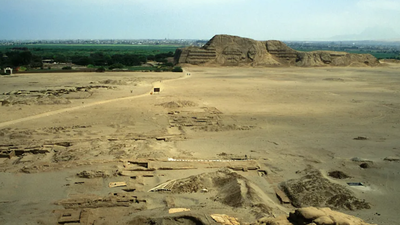
Ancient communities living along Peru’s northern coast experienced devastating floods, food shortages and periods of mass human sacrifice, yet everyday violence remained remarkably uncommon. A new study published in Frontiers in Environmental Archaeology, also reported by science platforms Phys dot org and Scimex, has found that only a small fraction of people living in the Lambayeque Valley showed physical evidence of interpersonal violence over more than 3,000 years. The findings offer a different perspective on how human societies respond to environmental disasters, suggesting that climate-related hardship does not necessarily lead to widespread conflict. The research, titled Pax Lambayeque? Trauma, Interpersonal Violence, and Environment over 3,000 Years in the Lambayeque Valley Complex, Peru, was conducted by researchers Thomas J Snyder of New York University and Haagen D Klaus of George Mason University. The team examined skeletal remains from 30 archaeological sites, using evidence preserved in bones to understand how people experienced violence, accidents and environmental changes. Of the 1,633 individuals with sufficiently clear dates of death, just 25 showed signs of injuries associated with interpersonal violence. This represented approximately 1.6 per cent of the sample. Another 77 individuals had evidence of accidental injuries.The researchers then compared these findings with historical climate patterns, including changes in rainfall, water availability and the frequency of El Niño-related flooding. Their analysis found no significant relationship between environmental instability and either violent or accidental injuries. They also found no clear difference in the incidence of violence between men and women.
A history shaped by extreme weather
The Lambayeque Valley occupies a particularly vulnerable stretch of Peru’s northern desert coast. Although the region generally receives little rainfall, its communities historically depended on rivers, marine resources and agricultural production for survival.This delicate balance was periodically disrupted by El Niño, a climate phenomenon associated with changes in Pacific Ocean temperatures and atmospheric conditions. Particularly intense episodes can bring torrential rainfall and severe flooding to parts of South America. For ancient communities, these events could have devastating consequences. Floodwaters damaged settlements and agricultural land, while changes in ocean conditions affected fish populations and other marine resources.Archaeological evidence has also linked episodes of mass human sacrifice in the region to periods of extreme environmental disruption. Sites associated with the Moche and Sicán cultures contain evidence of large-scale ritual killings, which researchers believe may have been connected to attempts to restore balance between human communities and the supernatural world. These practices raised an important question: if environmental disasters were severe enough to prompt ritual sacrifice, did they also increase violence in everyday life? The latest findings suggest that this was not necessarily the case.
Ritual sacrifice did not mean widespread violence
Although evidence of organised ritual killings exists at several archaeological sites, the skeletal record indicates that ordinary interpersonal violence remained relatively rare. The distinction is significant because ritual sacrifice and everyday violence represent different social practices. The presence of the former does not automatically establish that communities were experiencing widespread aggression, conflict or social breakdown.The researchers have suggested that access to marine resources may have helped Lambayeque communities withstand periods of agricultural disruption. Differences in how these societies organised their economies and social structures could also have played a role in limiting conflict. The study’s findings also contribute to a broader discussion about the relationship between climate change and human behaviour. Research from other parts of the Andes has documented different patterns of violence during periods of environmental and demographic instability, indicating that communities did not all respond to hardship in the same way.
What ancient bones reveal about climate resilience
The researchers have cautioned that skeletal evidence cannot capture every instance of violence. Many injuries, particularly those involving soft tissue, leave no permanent marks on bones. The study also examined long-term patterns rather than individual events, meaning shorter episodes of conflict may not have been identified.Additionally, the researchers could not establish precise dates for every individual in the collection, limiting how closely particular injuries could be connected to specific climatic events. Nevertheless, the findings provide an important archaeological perspective on resilience. The Lambayeque Valley’s history demonstrates that societies could experience repeated environmental disruptions without necessarily developing widespread interpersonal violence. Rather than treating conflict as an inevitable consequence of resource scarcity, the research highlights the role of social organisation, adaptation and access to resources in shaping how communities navigate periods of crisis.