
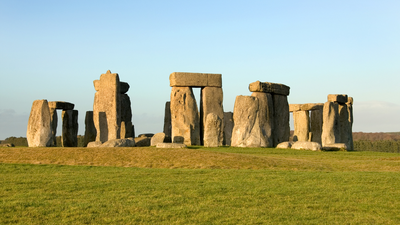
It is surprising how the stonehenge, one of the most recognisable and famous prehistoric monuments, still holds its secrets. One such secret it is hiding is of a six-tonne rock, ironically.For more than a century, scientists have been trying to work out where one particular stone at Stonehenge came from. The Altar Stone, which lies partly buried at the centre of the monument, has had geologists looking across Britain for answers. A discovery in 2024 published in Natureseemed to have finally solved the mystery, pointing towards northeast Scotland. However, a new study published published in the Journal of the Geological Society on November 5, 2026, has complicated things again. Researchers have found no matching rock source in the Scottish locations they investigated, leaving the stone’s origins uncertain.
The mystery of Stonehenge
Situated on Salisbury Plain in Wiltshire, England, the Stonehenge has stood for thousands of years, attracting archaeologists, historians and curious visitors alike. Its construction began around 3000 BC, with several additions and changes made over the next two millennia.But building a monument of this scale was no small feat. Its enormous stones had to be sourced, transported and arranged long before modern machinery existed. And they did not all come from the same place. Some of the smaller stones, known as bluestones, travelled approximately 225 kilometres from the Preseli Hills in west Wales to reach the site.Among the many stones that make up the monument, the Altar Stone stands out from the other towering sarsen stones that dominate Stonehenge. It is a large slab of Old Red Sandstone, measuring approximately 4.9 metres long and weighing around six tonnes. Unlike the other stones that stand upright, it lies flat beneath the collapsed remains of the Great Trilithon, partly hidden by the grass.Where it was quarried is a question scientists have struggled to answer for years.
From Wales to Scotland
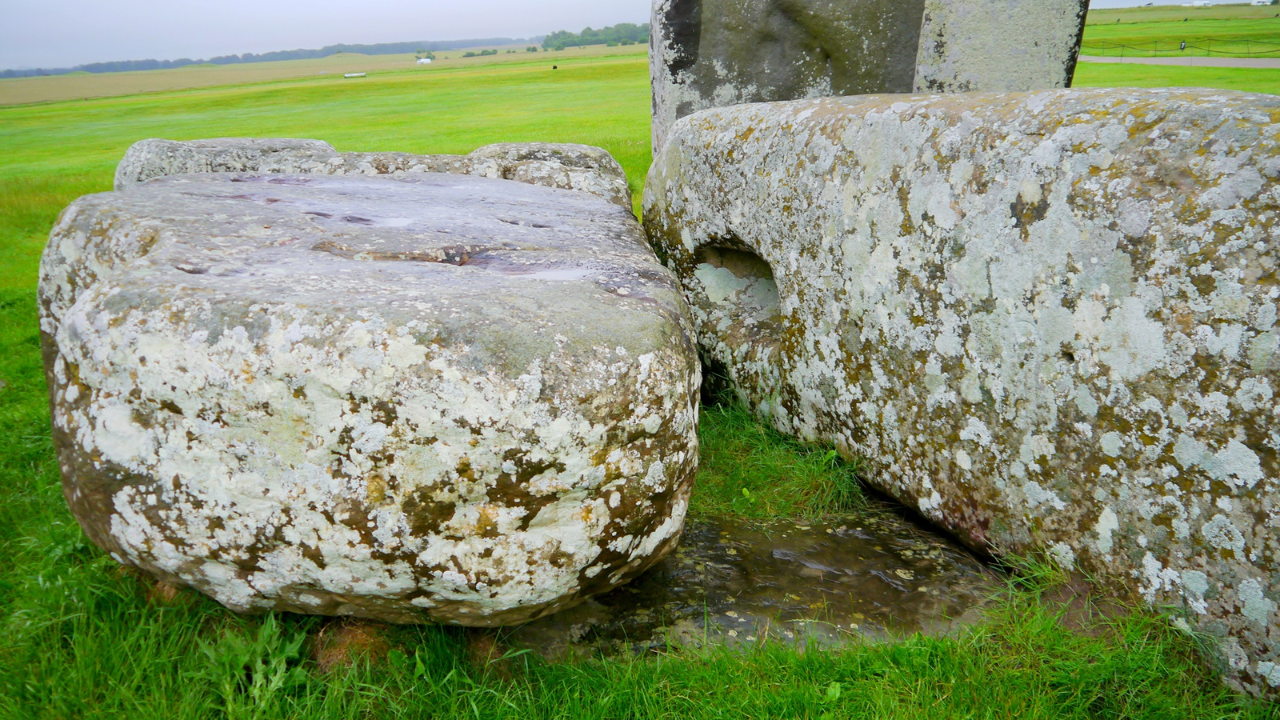
The Altar Stone. Image Credit: Professor Nick Pearce, Aberystwyth University
For nearly 100 years, the prevailing theory was that the Altar Stone had come from west Wales. This seemed like a reasonable explanation, considering that several of Stonehenge’s other stones had travelled from the region. However, scientists began questioning this assumption as they learnt more about the stone’s geological composition.In August 2024, a study published in Nature offered a rather surprising possibility. Researchers examined tiny mineral grains trapped inside fragments of the Altar Stone, including zircon, apatite and rutile. These minerals carry chemical and age signatures that can help scientists trace the geological history of a rock.Think of them as a geological fingerprint. By studying the minerals and comparing their characteristics with rocks from different regions, researchers can narrow down where a particular stone may have originated.The results pointed towards the Orcadian Basin in northeast Scotland. The mineral signatures closely matched those found in the region’s Old Red Sandstone, suggesting that the Altar Stone had travelled from much farther north than previously imagined.If the theory was correct, the stone had covered a journey of more than 700 kilometres to reach Salisbury Plain. How Neolithic communities managed to move something so heavy across such a distance was another question altogether. Whether it travelled by land, sea or a combination of both, the discovery offered a glimpse into just how connected prehistoric communities might have been.
The search begins again
The Scottish theory was exciting, but scientists needed more than a close mineral match to identify the exact source. Several geological locations can share similar mineral ages, even if their overall composition is different. This meant researchers had to look beyond the minerals that first pointed towards Scotland.In the latest study, an international team led by geologist Duncan Pirrie examined the Altar Stone in much greater detail. Published in the Journal of the Geological Society, the research brought together different techniques to study its structure, mineral composition, chemistry and isotopic characteristics.The team examined eight fragments held in museum collections that could be confidently linked to the Altar Stone. They also carried out non-invasive measurements on small exposed areas of the monument itself. Researchers then compared these findings with geological samples collected from potential source locations in northeast Scotland. Around 70 samples were collected from Scottish rock outcrops and taken back for laboratory testing.This time, the scientists were looking for a much more complete match. Along with mineral ages, they examined features such as chrome spinel, clay minerals and barium chemistry. These additional characteristics helped build a more detailed picture of what the original rock should look like.And the results were not quite what they expected. None of the Scottish locations examined had the complete combination of geological characteristics found in the Altar Stone. Although the mineral ages still pointed towards an ancient source associated with Laurentia, a geological landmass that once existed in the Northern Hemisphere, the evidence was not enough to identify the Orcadian Basin as its precise origin.
So, where did the stone come from?
The latest findings do not mean that scientists have returned to square one. They have, in fact, managed to narrow down the possibilities. The research makes a northeast Scottish origin very unlikely, while also providing a more detailed geological fingerprint that can be used to investigate other locations.Southern Britain has also been ruled out as the source. Other parts of Scotland, northern England and even Ireland remain possible locations for further investigation.The distinction matters because finding where the stone came from could tell us much more than its geological history. It could reveal how far Neolithic communities travelled, how they exchanged resources and how they organised the movement of enormous objects across landscapes. It could also help researchers understand the connections that existed between communities thousands of years ago, long before written records could tell us about them.For now, the Altar Stone remains firmly in place, with its origins somewhere beyond the boundaries of what scientists have managed to establish. Every new study brings another piece of the puzzle, even when it eliminates an answer that once seemed convincing. Perhaps the next geological expedition will finally uncover its birthplace. Until then, Stonehenge’s six-tonne mystery is still waiting to be moved, at least on paper.