
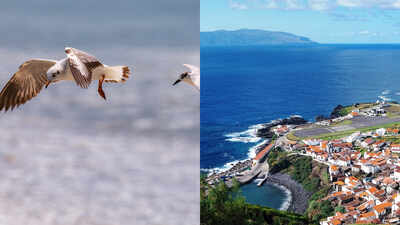
Imagine an entire island voluntarily turning off its lights, allowing the night sky to guide thousands of young birds towards the ocean. On Corvo, the smallest and northernmost island of Portugal’s Azores archipelago, darkness is not a sign of inactivity but an important conservation effort. Every autumn, residents come together to reduce artificial lighting, giving young seabirds a better chance of completing their first journey out to sea. What began as a small community-led rescue initiative has evolved into a wider conservation movement, demonstrating how simple changes in everyday life can make a significant difference to wildlife.
A blackout with a purpose
Home to approximately 450 residents, Corvo has been working to protect Cory’s shearwaters since 1991, when locals began noticing large numbers of young birds dying after leaving their nests. According to The Guardian, these seabirds spend around three months in their nests before attempting their first flight towards the Atlantic Ocean. They follow natural light and the night sky, but street and building light can confuse them and draw them toward populated areas.Disoriented birds often hit buildings or roads, making them easy prey for predators, vehicles, and dehydration. Residents started nighttime patrols to return stranded birds to the ocean.The initiative gained wider recognition in 1995, when the Azorean government launched SOS Cagarro, a campaign extending rescue efforts across all nine islands. The Portuguese Society for the Study of Birds (SPEA) subsequently became involved, helping strengthen conservation and public awareness programmes.
Five nights of darkness
The island’s approach has gradually expanded beyond rescuing stranded birds. According to SPEA, public lighting is switched off during particularly vulnerable periods in autumn, when young Cory’s shearwaters leave their nests. The latest five-night initiative, organised between October 26 and 30, involves switching off public lights between 9pm and 4am.Residents and volunteers continue patrolling Vila do Corvo, the island’s only settlement, looking for birds that have become disoriented. Those found are placed in cardboard boxes overnight to recover before being released from coastal cliffs the following morning.The wider campaign has also received strong community support. A SPEA survey involving 207 island residents recorded unanimous backing for the blackout initiative.
A conservation effort making a difference
The impact extends well beyond Corvo. According to The Guardian, more than 30,000 Cory’s shearwater fledglings have been rescued across the Azores since 2015, including approximately 6,000 on Corvo alone.Research conducted through the international EELabs project has also highlighted the relationship between artificial lighting and seabird disorientation. Preliminary monitoring on Corvo found that approximately 85% of incidents involving grounded young shearwaters occurred when streetlights were switched on.SPEA’s work through international conservation projects, including EELabs and LuMinAves, aims to encourage other communities to adopt measures that reduce light pollution.
Letting nature find its way
Corvo’s initiative also offers a practical lesson for destinations beyond Portugal. Conservation does not always require expensive infrastructure or sweeping interventions. Shielding streetlights, reducing illumination and temporarily switching off unnecessary lighting can all help protect vulnerable wildlife.For an island of just 450 people, the effort has created an example with international relevance. By allowing darkness to reclaim its streets for a few hours each night, Corvo is helping young seabirds find their way home to the ocean.Images Courtesy: istock