
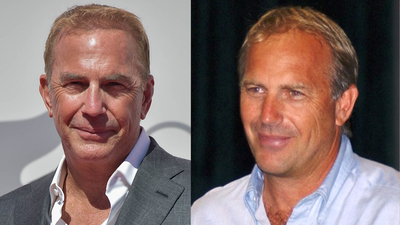
Kevin Costner’s Yellowstone television series brought an estimated 2.1 million visitors to Montana in 2021, and a university study links the show to $730 million in spending. Costner plays John Dutton, the sixth-generation patriarch of a fictional Montana ranch family, in a Paramount Network drama described as the most popular series on American television. Filming takes place largely in Darby, Hamilton, Missoula and the Bitterroot Valley. Its season-five premiere showed more than 12 million viewers the scenery of western Montana, and the series was the highest-rated non-sports programme of the 2021-22 season. The audience stretches well beyond the United States.
A television drama has arguably eclipsed millions of dollars in state tourism advertising
Film tourism is the branch of travel in which visitors seek out places made famous by films and television programmes. According to the Montana Economist, it applies especially well to Yellowstone. The show’s title recalls the famously beautiful national park, while its characters, stories, and backdrop embrace the Mountain West and, above all, western Montana’s landscape.The Montana Office of Tourism spends millions on advertising campaigns to raise awareness of the state’s attractions. The Montana Economist argues that the popularity of the series has arguably eclipsed those efforts and lifted Montana’s image among a far wider audience of potential travellers.
Researchers added a national survey of past visitors to a production study of season four
Since 2020, the series has been filmed entirely in western Montana. The Montana Economist reported that the studio disclosed detailed spending records when applying for a film tax credit under the Montana Economic Development Industry Advancement Act, which became law in July 2019.Researchers at the University of Montana’s Bureau of Business and Economic Research used those records for an April 2022 report. It found that about $72 million of qualifying spending, together with 116 Montana residents employed in production, supported 527 new jobs, $25.3 million in additional personal income and $85.3 million in extra gross receipts. That covered the five months from October 2020 to February 2021, when season four was made.The report admitted a gap, it left out the advertising value of films that use Montana as a backdrop. To fill it, the bureau teamed up with the university’s Institute for Tourism and Recreation Research. Using the survey firm Qualtrics, they assembled a national panel of people who live outside Montana but had visited within the previous three years. Respondents were asked why, how often and for how long they visited, and how far the show influenced their decision.
Seven in ten past visitors had watched the show, and nearly one in five said it swayed their trip
Among the surveyed visitors, 71.2% said they had watched Yellowstone, 12.5% were unsure, and 16.2% had not. Because individual episodes draw 10 to 12 million viewers nationally, the researchers noted that this group is far more likely to tune in than the general population.Asked how much the show influenced their decision to travel, 19.3% chose one of the two strongest options on a five-point scale. The researchers combined these answers with the institute’s visitor spending profiles to estimate how much spending the show induced in 2021.
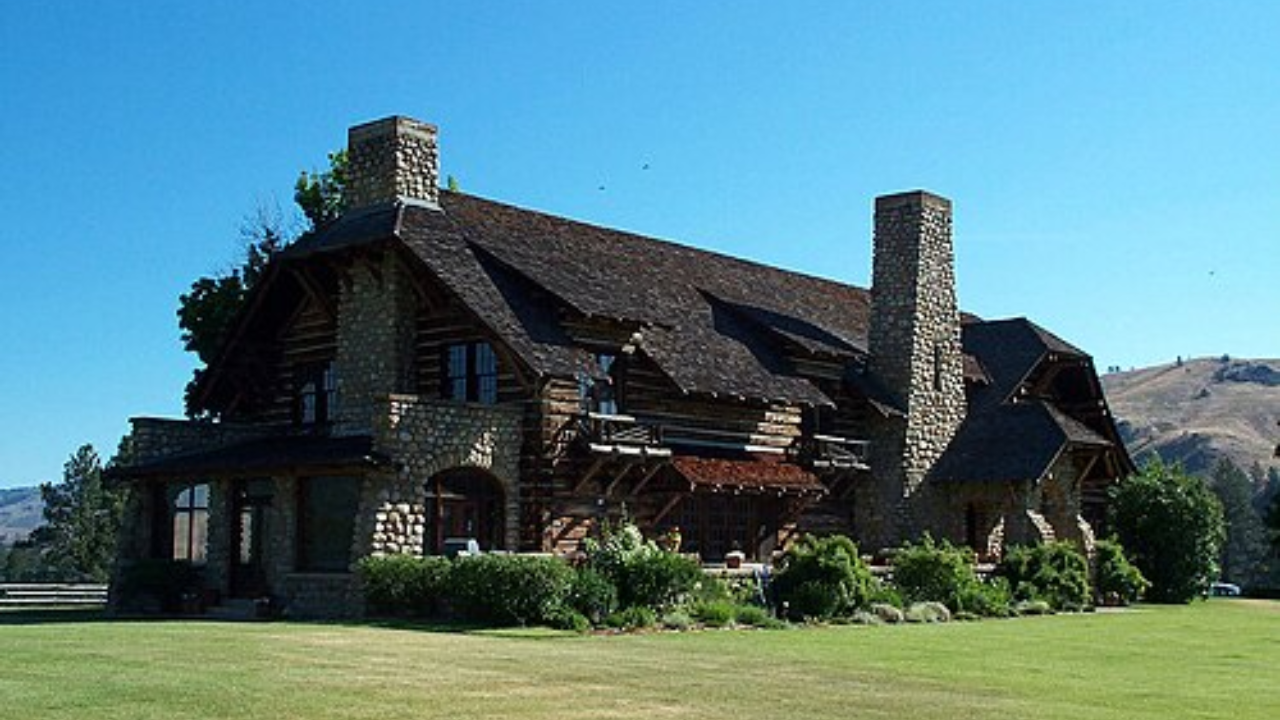
Image: Wikipedia
A “no Yellowstone” scenario shows more than 10,000 extra jobs and $376 million in household income
To judge the overall effect, the researchers built a hypothetical economy in which season four was never filmed and the visitors who said the show motivated their trip never came. Comparing it with the real economy measured what the series adds.The gap was large. The Montana Economist reported more than 10,000 additional jobs statewide, and household income $376.1 million higher, of which $324.7 million was after-tax income available to spend. State tax revenue directed in whole or in part to the general fund rose by $44.5 million, including $17.3 million from the individual income tax.The University of Montana added that the activity generated roughly $1.1 billion in business and nonbusiness output. It also said the $730.1 million figure combines visitor spending with film production spending. Patrick Barkey, director of the bureau, told the University of Montana that extending the earlier analysis to tourism was “eye-opening”.
The benefits stretched beyond hotels to health care, transportation, electricians and carpenters
As expected, many of the new jobs sit in industries that receive visitor spending, such as accommodation and food, and arts and entertainment. The Montana Economist found significant job gains in seemingly unrelated sectors too, including health care and transportation, as the money passed from business to business.Todd O’Hair, president and chief executive of the Montana Chamber of Commerce, told the university that food services, hotels, rental companies and transport firms were all benefiting, as were high-tech businesses and skilled trades such as electricians and carpenters. He described the show as a big driver of tourism, jobs and tax revenue. The study also estimated that the higher economic opportunity attracted and kept 3,305 more people in the state.