
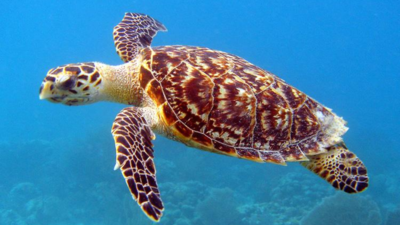
Sea turtles are nesting on Nu’utele Island in Samoa again after being absent for decades. Their return follows a major conservation effort to remove non-native predators from the uninhabited Pacific island. According to a statement released by global charity Island Conservation on October 20, 2026, conservation teams successfully removed invasive rats and feral pigs from the island. The joint restoration project began in 2025 and involved more than 130 days of fieldwork across 12 separate expeditions, which ended in May 2026. Nu’utele Island is an uninhabited Key Biodiversity Area within a marine protected area off the eastern coast of Upolu. It contains Samoa’s best-preserved tropical forest. However, animals brought to the island from elsewhere had damaged local food chains, destroyed native plants and hunted vulnerable wildlife. One year after the removal campaign ended, field surveys show widespread signs of recovery across the island’s forests and coastal areas.
Native vegetation carpet returning to forests
Removing invasive mammals has allowed native plants to grow again without being eaten by wild pigs or having their seeds consumed by rats. Forest floors that were once bare are now covered with thick layers of native tree seedlings. In an official statement published by Island Conservation, project manager Paul Jacques described the changes seen during recent monitoring visits. “In many areas, native seedlings are carpeting the forest floor,” Jacques said. “On recent visits, I saw knee-high seedlings growing where forest regeneration had previously been suppressed. People are now able to grow and harvest giant taro plants where crops would have failed previously. These changes point to the recovery of natural processes.” The return of plant life is not limited to the natural forest. Local farming families who visit the island are once again growing important crops, including pineapples, papayas, bananas and giant taro. They can now do so without losing their harvests to destructive wild pigs. As forests grow back, their roots help hold the topsoil in place, reduce coastal erosion and protect natural freshwater supplies during severe weather.
Native birds and marine species resume breeding
Removing invasive animals has made the island safer for native and locally unique bird species to nest. Field researchers have been monitoring wildlife and have recorded rapid population growth among several threatened bird species. Nu’utele is home to Samoa’s largest remaining population of the rare Shy Ground Dove. This species has been declining across the Southwest Pacific. Within one month of removing the invasive predators, conservation scientists found several active ground-dove nests containing eggs inside bird’s-nest ferns. Monitoring teams also found new nests belonging to the Samoan Starling, a species found only in Samoa. They also recorded active breeding behaviour among the Samoan Flycatcher and the Samoan Whistler. With predators gone, sea turtles have also returned to Nu’utele’s beaches to lay their eggs after decades of absence. Survey teams also recorded a land crab species that had never before been documented on the island. Land crabs play an important role in moving nutrients between coastal forests, coral reefs and the surrounding ocean. The improved conditions on Nu’utele are also creating opportunities to bring back other species in the future. Island Conservation plans to introduce the Mao, an endangered native Samoan forest bird, to the island as part of its wider 2026 to 2032 Restoring Pacific Islands for Nature and People Project.
Regional partnership coordinates complex field operations
Removing the invasive species required careful planning and cooperation between local communities and international environmental groups. Samoa’s Ministry of Natural Resources and Environment led the project alongside traditional landowners and community volunteers from the Aleipata district. Island Conservation provided technical guidance, while the Pacific Regional Invasive Species Management Support Service coordinated regional logistics. The service is managed by the Secretariat of the Pacific Regional Environment Programme. The project received funding from New Zealand’s Ministry of Foreign Affairs and Trade and the United Kingdom International Development through the Predator Free Pacific programme. Bell Laboratories also provided additional operational support.In comments published by Island Conservation, David Moverley, an invasive species adviser at the Secretariat of the Pacific Regional Environment Programme, explained how the project’s success could help other Pacific islands prepare for climate challenges. “Nu’utele shows what’s possible when communities, governments, and conservation partners work together towards a shared vision,” Moverley said. “We’re seeing forests regenerate, native wildlife return, food systems improve, and vital habitat expand for species that depend on healthy ecosystems. The lessons learned from this island can help guide restoration efforts across the Pacific and beyond.” Conservation teams will continue to monitor Nu’utele’s ecosystems over the long term. They will track forest growth, study marine life within the nearby protected area and collect information to guide future island restoration projects across the Pacific.