
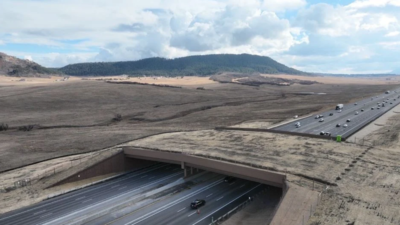
For wildlife, a busy highway can be more than an obstacle. It can separate feeding grounds, disrupt seasonal migrations and turn an ordinary journey into a deadly gamble. In Colorado, a new network of wildlife crossings is helping change that equation, with officials reporting a sharp decline in collisions along a heavily travelled stretch of Interstate 25. Reporting by Smithsonian Magazine, Colorado Politics and The Colorado Sun has highlighted the results of the state’s wildlife mitigation programme, which combines fencing, underpasses and a recently completed overpass near Monument. The findings suggest that infrastructure designed around animal movement can make roads safer for wildlife while reducing risks for motorists.
A highway that divided wildlife habitat
Interstate 25 is one of Colorado’s major transport routes, connecting communities along the state’s Front Range. The stretch between Castle Rock and Monument carries more than 100,000 vehicles a day and cuts through extensive wildlife habitat, creating a dangerous barrier for animals that need to move between seasonal ranges. Elk, mule deer and pronghorn travel between lower elevations in winter and mountain habitats in summer. When their routes intersect with fast-moving traffic, the consequences can be devastating for animals and drivers alike.To address the problem, agencies began developing a wildlife crossing system in 1996. The programme eventually included about 14 miles of fencing on both sides of the highway and five underpasses designed to guide animals beneath traffic. The latest addition is a $15 million wildlife overpass near Monument, which opened in December 2025. Measuring approximately 200 feet wide and 209 feet long, the structure spans six lanes of traffic and covers roughly 41,800 square feet. State officials describe it as the largest wildlife overpass of its kind in North America.
Collision numbers show a dramatic decline
The results have been striking. According to figures reported by Colorado Politics, wildlife-vehicle collisions along the 18-mile corridor fell by approximately 85 per cent annually between 2022 and 2024, after most of the mitigation infrastructure had been completed. During the final year covered by the study, collisions were down 91 per cent.The distinction matters: the reduction reflects the combined crossing system, rather than the overpass alone. Officials are continuing to collect data to determine the bridge’s individual contribution to the improvement. The Colorado Sun has also reported that only two wildlife-related crashes had been recorded since the overpass opened, although that early figure does not by itself establish the long-term impact of the structure. The benefits extend to traffic flow. Fewer collisions mean fewer emergency responses, damaged vehicles and unexpected delays on a busy commuter and freight route.
From elk to frogs, animals are using the bridge
Trail cameras and wildlife surveys have recorded a range of animals using the crossing system. Elk have been photographed crossing the new bridge, while pronghorn have begun moving to areas west of I-25 after decades of limited safe passage.Smaller creatures are benefiting, too. Reports have documented rabbits and northern leopard frogs using the overpass. Designers have also placed logs along parts of the crossing to give small mammals, including the threatened Preble’s meadow jumping mouse, additional cover from predators.Vegetation is another important part of the plan. Drought conditions have slowed plant growth on the bridge, and officials hope improved vegetation will make the crossing more attractive to wildlife as the habitat develops. The goal is not simply to get animals over the road. It is to create a passage that feels safe and familiar enough for different species to use as part of their natural movements.
Colorado plans more wildlife crossings
The success of the I-25 project is informing wider efforts to reduce collisions across Colorado. Officials are developing six additional crossing systems, including an overpass specifically designed for Rocky Mountain bighorn sheep, the state’s official animal.Wildlife crossings require substantial upfront investment, but preventing collisions can also reduce the economic costs associated with vehicle damage, injuries, emergency services and traffic disruption. Colorado’s experience demonstrates why conservation infrastructure is increasingly being considered alongside traditional road safety measures. Fencing directs animals towards designated routes, underpasses provide alternatives beneath traffic, and overpasses reconnect habitats that highways have divided.The latest figures offer encouraging evidence that these measures can work when planned as a connected system. For Colorado, the challenge now is to sustain the improvements, monitor how animals use the crossings over time and determine where similar infrastructure could make the greatest difference. A highway may remain essential for people travelling through the state, but it no longer has to be an insurmountable barrier for the wildlife living alongside it.