
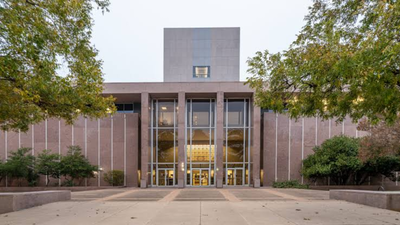
The Texas Supreme Court has agreed to hear a dispute over whether a local government can take private property through eminent domain to build a golf facility that will be leased to a private operator. The case involves a 3.548-acre plot of land in Westworth Village owned by local resident Jim Burgess. In 2021, city officials tried to buy the property for $1.1 million as part of a larger plan to redevelop the municipal golf course, Hawk’s Creek. After Mr Burgess rejected the offer, the city moved to take the land through eminent domain, a legal process that allows the government to acquire private property without the owner’s consent. Five years after the dispute began, justices on the state’s highest court will consider whether local governments have the constitutional power to take private land for projects intended to be run by private businesses.
Early legal actions and initial valuation
After the city council moved to take the property, Mr Burgess filed a legal challenge against Westworth Village. Records from the Second Court of Appeals of Texas show that a trial court first appointed three special commissioners to decide how much the land was worth. The panel valued the property at $1.545 million. Mr Burgess challenged the valuation in trial court. The court rejected his argument that the taking itself was unlawful, but the dispute over compensation continued to a jury trial. The jury eventually awarded him $1.3 million under state laws governing eminent domain. Mr Burgess was unhappy with the decision allowing the city to take his land, so he appealed the condemnation order to the Second Court of Appeals in Fort Worth. At the same time, Westworth Village appealed a separate order requiring the city to pay court costs.
Appeals court overturns land seizure
On 19 June 2025, a three-judge panel of the appeals court, made up of Justices Mike Wallach, Elizabeth Kerr and Brian Walker, ruled in favour of Mr Burgess. Justice Wallach wrote the majority opinion, which overturned the trial court’s decision and sent the case back for further proceedings. The ruling said that state laws and constitutional rules place strict limits on how local governments can use eminent domain. The court reviewed city plans showing that the land was meant to become part of a leased facility called the Golf Performance Center at Hawk’s Creek. Under the lease documents, the facility would include a driving range, practice areas, a clubhouse, parking facilities and an office.Justice Wallach stressed that Texas courts must carefully examine cases in which local governments try to force owners to sell their property. “These circumstances help explain why our law directs Texas courts to carefully scrutinize any exercise of eminent-domain authority,” wrote Justice Wallach. “Condemnation is one area in which the government must turn sharp corners. It is a fit role for the judiciary to ensure that the government stays in its lane.”Lawyers representing Mr Burgess at Johnston Tobey Baruch welcomed the appeals court’s decision. “We are delighted with the court’s ruling, which will permit our client to continue his challenge to the taking in the trial court,” the firm stated after the ruling.
Constitutional limits and arguments over public use
The main legal question concerns Article I, Section 17 of the Texas Constitution. It states that private property cannot be taken or used for public purposes without proper compensation. Changes to state law and constitutional amendments introduced in 2005, including Chapter 2206 of the Texas Government Code, also place clear limits on government use of eminent domain. These rules prohibit taking private property for economic development or transferring it to private entities, subject to the law’s specific provisions. Westworth Village officials argued that taking the 3.548-acre plot qualified as public use because it would become part of a park and golf course redevelopment project open to the public. However, the appeals court said that the legal definition of public parks cannot override constitutional protections against forced property transfers that benefit private operators. Legal observers say the case will test the limits between public leisure facilities and unlawful transfers of land to private businesses. Local governments regularly run public parks, but allowing private companies to operate facilities built on land taken through eminent domain raises difficult legal questions under Texas law.
Final review by state supreme court
After losing in the appeals court, Westworth Village asked the Supreme Court of Texas to review the decision. According to court records, the state Supreme Court granted review on 2 October 2026 under case number 25-0836. Oral arguments before the state Supreme Court justices are scheduled for 11 January 2027. The court’s decision is expected to set a binding legal precedent across Texas on whether local governments can use eminent domain to acquire land for municipal sports facilities that are operated by commercial businesses.